

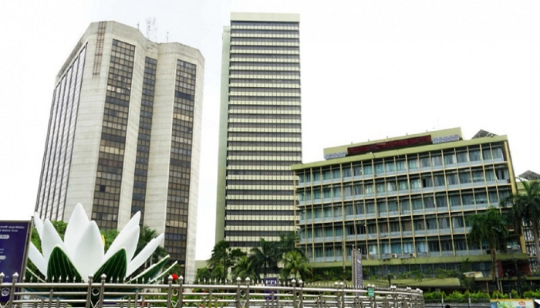
The country’s banking sector was already in dire straits. Huge amounts of bad loans, money laundering, lack of good governance, weak financial health of some banks, liquidity crisis in Islamic banks and weak regulation of Bangladesh Bank are weakening the banking sector day by day. In this situation, due to the unstable environment surrounding the student movement, the fall of the government and the change of government that happened in the country in the last one month, the struggle to change the ownership of several banks is going on.
Apart from this, the crisis in the banking sector has intensified with the resignation of the top officials including the governor, deputy governor of the central bank. Economists believe that rapid banking sector reforms are necessary to turn around the banking sector and speed up financial management.
During the budget speech of the outgoing Sheikh Hasina government for the fiscal year 2019-20, the then finance minister hinted that the government was going to introduce several reforms to bring order to the banking sector. He will mention such reforms during the next four budget announcements. However, only a few initiatives have seen the face of implementation. As a result, instead of restoring order, the banking sector became more chaotic. The government and the central bank have amended the Bank Companies Act to address the issues related to good governance in the banking sector. On the other hand, Bangladesh Bank has announced the roadmap. However, these initiatives are insignificant in solving the current problems of the banking sector.
Currently the banking sector is struggling with high non-performing loans, poor financial health of some banks, liquidity crisis of several Islamic banks and weak control structure of Bangladesh Bank. In 2009, the amount of defaulted loans was Tk 22 thousand crores. Which now stands at 1 lakh 85 thousand crores. According to the data of the central bank, the total amount of problem loans, including allocated loans and rescheduled loans, stands at Tk 3 lakh 77 thousand 922 crores. Behind it was a deliberate default. The government supported them. Banks have been given to party people. Policy has been changed at will.
Center for Policy Dialogue (CPD) Executive Director Fahmida Khatun said to press the banking sector reforms, an independent banking commission is needed to ensure good governance in the banking sector. An inclusive, transparent, impartial and independent commission should be constituted to bring transparency in the banking sector.
He also said that there is a great lack of good governance and accountability in the economy. Previous governments have not done institutional reforms. The new government will have to deal with them. Then order can be brought back to the economy. So all in all, freeing the people from inflation, restoring order to the economy, ensuring good governance and accountability and institutional reforms should be the main economic priorities of the new government.
The executive director of research organization PRI. Ahsan H Mansoor said, the new government is under a lot of pressure, they have to reform in many sectors. Similarly, more importance should be given to reforming the banking sector. It should say how the government wants to reduce inflation, whether it will form a commission or task force to solve the problems of the banking sector, or whether Bangladesh Bank will do it or not. In addition to the economy, the position of the government should be announced on basic issues including empowerment of local government, government services, institutional reforms, political reforms.
There has been chaos in several private banks including Islami Bank Bangladesh PLC, Social Islami Bank, United Commercial Bank (UCB). Among them, the Managing Director (MD) of Islami Bank, Muhammad Munirul Mawla, has been prevented from working in the office. Two Deputy Managing Directors (DMDs) of Social Islami Bank have been forced to resign. A protest and human chain took place in front of the United Commercial Bank. There have been demands to change the board of directors of some other private banks including National Bank, South
The country’s banking sector was already in utter disarray. Huge amount of bad loans, money laundering, lack of good governance, weak financial health of some banks, liquidity crisis in Islamic banks and weak regulations of Bangladesh Bank are weakening the banking sector day by day. In this situation, the unstable environment surrounding the student movement that happened in the country in the last one month, the collapse of the government and the change of government, the struggle to change the ownership of several banks is going on.
Apart from this, the crisis in the banking sector has intensified with the resignation of the top officials including the governor, deputy governor of the central bank. Economists believe that rapid banking sector reforms are necessary to turn around the banking sector and speed up financial management.
During the budget speech of the outgoing Sheikh Hasina government for the fiscal year 2019-20, the then finance minister hinted that the government was going to introduce several reforms to bring order to the banking sector. He will mention such reforms during the next four budget announcements. However, only a few initiatives have seen the face of implementation. As a result, instead of restoring order, the banking sector became more chaotic. The government and the central bank have amended the Bank Companies Act to address the issues related to good governance in the banking sector. On the other hand, Bangladesh Bank has announced the roadmap. However, these initiatives are insignificant in solving the current problems of the banking sector.
Currently the banking sector is struggling with high non-performing loans, poor financial health of some banks, liquidity crisis of several Islamic banks and weak regulatory framework of Bangladesh Bank. In 2009, the amount of defaulted loans was Tk 22 thousand crores. Which now stands at 1 lakh 85 thousand crores. According to the data of the Central Bank, the total amount of problem loans, including allocated loans and rescheduled loans, stands at Tk 3 lakh 77 thousand 922 crores. Behind this was a deliberate default. The government supported them. Banks have been given to party people. Policy has been changed at will.
Fahmida Khatun, executive director of Center for Policy Dialogue (CPD) said in the light of the times on banking sector reforms, an independent banking commission is needed to ensure good governance in the banking sector. An inclusive, transparent, impartial and independent commission should be constituted to bring transparency in the banking sector.
He also said that there is a huge lack of good governance and accountability in the economy. Previous governments have not done institutional reforms. The new government will have to deal with them. Then order can be brought back to the economy. So all in all, freeing the people from inflation, restoring order to the economy, ensuring good governance and accountability and institutional reforms should be the main economic priorities of the new government.
The executive director of research organization PRI. Ahsan H Mansoor said, the new government is under a lot of pressure, they have to reform in many sectors. Similarly, more importance should be given to reforming the banking sector. It should say how the government wants to reduce inflation, whether it will form a commission or task force to solve the problems of the banking sector, or whether Bangladesh Bank will do it or not. In addition to the economy, the position of the government should be announced on basic issues including empowerment of local government, government services, institutional reforms, political reforms.
Recent chaos has exacerbated the crisis: Meanwhile, the country’s banking sector has been in major disarray since the fall of the government. At least three private banks as well as state-owned banks are in trouble. In the absence of the governor and senior officials, the order did not return to Bangladesh Bank itself. Concerned people think that there is so much instability in the banking sector due to the absence of guardians.
There has been chaos in several private banks including Islami Bank Bangladesh PLC, Social Islami Bank, United Commercial Bank (UCB). Among them, Islami Bank Managing Director (MD) Muhammad Munirul Mawla has been barred from working in the office. Two Deputy Managing Directors (DMDs) of Social Islami Bank have been forced to resign. Protests and human chain were held in front of United Commercial Bank. There have been demands to change the board of directors of some other private banks including National Bank, South East Bank, Al-Arafah Islami Bank or include new directors.
Economists and bank executives say that the condition of the country’s banking sector is already fragile due to unlimited irregularities and corruption. Due to the loss of money in the name of loans, the foundations of most banks are completely weakened. Now is the time to pull the banking sector. But if the chaos that is being created is not controlled quickly, the situation will turn dire. Many banks in the country will go bankrupt if panicked customers start withdrawing their deposits. Besides bringing law and order under control, the main responsibility of the new government will be to restore order in the banking sector.
Officials participating in the protest claimed that after the change of ownership in 2016, many honest and efficient officials of Islami Bank were fired. Conversely, bank money loss associates get promoted quickly. Now those corrupt officials will not be allowed to work in the bank. Again, the officers and employees appointed from 2016 will not be allowed to enter the bank.
What is the roadmap for reforms in the banking sector: The central bank has announced a roadmap to restore good governance in the banking sector of the country. But that roadmap has so far been limited to rough announcements. Although the financial condition of weak banks did not improve as part of the reforms, attempts were made to merge them with better-performing banks; However, it is believed that it may be stopped with the change of government.
During the tenure of the outgoing government, action plans were taken on 17 issues in the roadmap of Bangladesh Bank.
Among these five important issues are – reduction of bad loans, elimination of bad loans and fraud, appointment of competent directors, appointment of competent independent directors and merger of weak banks with strong banks, known as mergers. However, their implementation was not seen that way. Professor Dr. Economists feel that the interim government led by Muhammad Yunus should take steps to implement these initiatives to reform the banking sector and the soccer team should take some new effective steps to restore momentum to the backward sector.

