

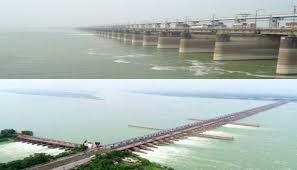
B Mirror Report: The government has approved the long-debated Padma Barrage Project at an estimated cost of Tk 34,347 crore, aiming to improve water management, reduce salinity intrusion, and support agriculture in the south-western region.
The approval came at a meeting of the Executive Committee of the National Economic Council (Ecnec) held at the Secretariat on Wednesday, chaired by Prime Minister Tarique Rahman.
Officials said the total project cost stands at Tk 50,443.64 crore, while Tk 34,347 crore has been approved in the first phase.
Under the project, a barrage will be constructed at Rajbari’s Pangsha with a storage capacity of around 2,900 million cubic metres of water to regulate dry-season river flow across key river systems, including the Gorai-Madhumati and Ichhamati-Mathabhanga networks.
The project is expected to ensure irrigation support for around 2.88 million hectares of farmland in several districts, including Kushtia, Faridpur, Jashore, Khulna, Barishal, Pabna, and Rajshahi.
It also includes potential hydropower generation of 113MW and provisions for multi-purpose use of the barrage deck for roads, transmission lines, and pipelines.
Officials said the project could increase annual rice production by 2.39 million tonnes and fish production by 2.34 lakh tonnes.
During implementation, it is expected to generate over 12 crore man-days of employment and create around 9.27 lakh direct and indirect jobs. Plans also include satellite towns and rural housing facilities for around 1.5 lakh families.
The project is projected to yield annual economic returns of about Tk 8,000 crore and contribute 0.45 per cent to GDP growth, while helping reduce salinity intrusion and restore ecological balance in the south-western region.
Officials said the project has been under discussion for decades, with studies dating back to the 1960s. They noted that reduced upstream flow from India’s Farakka Barrage has significantly affected the Padma River system, leading to salinity intrusion, river erosion, and declining agricultural productivity.
The project is scheduled for completion by June 2033 and will be fully financed by government resources.

