

BM Report:
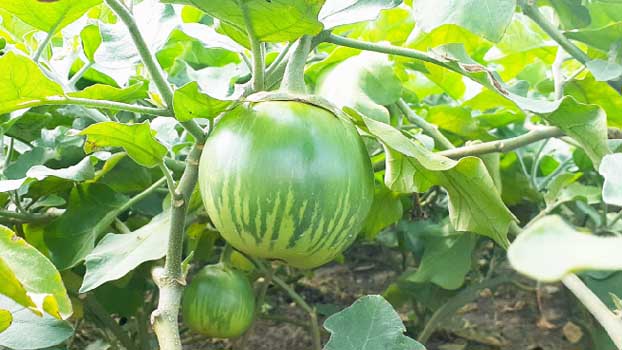
Brinjal, a beloved aubergine in Bangladesh, has become a luxury item in recent weeks, with prices skyrocketing to Tk 80-90 per kilogram in some markets. This marks a significant jump from the Tk40-50 per kg that was typical just a few months ago, leaving many Bangladeshis struggling to afford this staple food.
Several factors have conspired to create this perfect storm of brinjal scarcity and inflation. Unfavorable weather conditions, including excessive rainfall and pest infestations, have wreaked havoc on brinjal crops across the country. This has led to a drastic decline in production, with farmers unable to meet the usual market demand.
Adding fuel to the fire is the seasonal surge in brinjal consumption during winter months. Brinjal is considered a warming and nutritious food, making it especially desirable during the colder months. This increased demand, unfortunately, coincides with the production slump, pushing prices even higher.
Transportation costs have also played a role in the brinjal price hike. The rising cost of fuel and transportation has forced farmers and traders to pass on these additional expenses to consumers, further inflating the final price of brinjal.
The consequences of this brinjal crisis are dire, particularly for low-income Bangladeshis. Brinjal is not just a delicious dish; it is an affordable source of essential vitamins, minerals, and fiber. With its price skyrocketing, many families are finding it difficult to access this vital source of nutrition.
The Bangladeshi government is scrambling to address the brinjal crisis. They have implemented several measures. The government is providing financial assistance to brinjal farmers who have been affected by the production decline.
While these measures are a step in the right direction, it is likely that brinjal prices will remain elevated for the foreseeable future. The damage caused by unfavorable weather conditions cannot be easily undone, and the seasonal demand peak is still upon us.
The brinjal crisis highlights the vulnerability of Bangladesh’s food security to both environmental and economic factors. It also underscores the importance of diversifying agricultural production and investing in resilient farming practices.

