

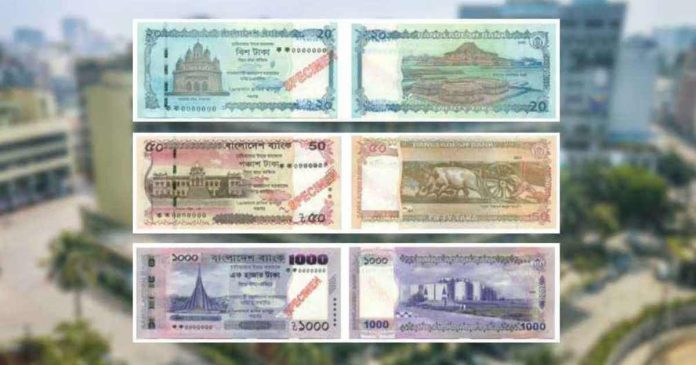
The Bangladesh government has moved to strengthen its legal framework against counterfeit currency by drafting the Counterfeit Currency Prevention Act, 2026, which proposes up to seven years’ imprisonment for knowingly possessing, using or circulating fake banknotes.
Prepared by the Financial Institutions Division under the Ministry of Finance, the draft law has been circulated among relevant ministries and agencies for feedback and published online for public consultation. The proposed legislation aims to address the limitations of existing laws by creating a unified legal framework to combat increasingly sophisticated counterfeit currency crimes.
Under the draft, offences such as manufacturing, attempting to produce, importing, exporting, transporting, storing, selling and distributing counterfeit notes would carry stricter penalties. The law also classifies altered, chemically bleached and mismatched banknotes as counterfeit currency and authorizes the seizure and confiscation of printing equipment, special paper, ink and other materials used in forgery.
The proposed law would designate most counterfeit currency offences as cognizable, non-bailable and non-compoundable, allowing police to investigate cases without prior court approval. It also empowers Bangladesh Bank-appointed currency officers to certify whether a suspected banknote is counterfeit, with such certification admissible as evidence in court.
Financial Institutions Division Secretary Nazma Mobarek said the draft would be finalized after consultations before being placed before the Cabinet for approval. The initiative comes as authorities seek to curb the growing use of advanced digital technologies in counterfeit currency production.

