

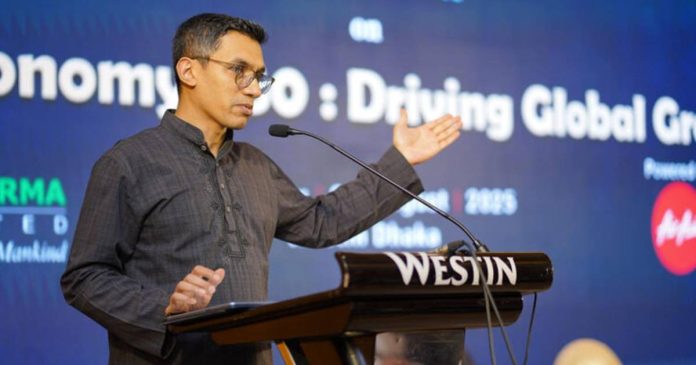
The government is committed to making Bangladesh a regional center for halal goods by fostering an environment that supports the halal economy, according to Chowdhury Ashiq Mahmud Bin Harun, Executive Chairman of the Bangladesh Investment Development Authority (BIDA) and Bangladesh Economic Zones Authority (BEZA).
With the global halal economy worth $7 trillion, the government is trying to put itself in a competitive position.
Speaking to the main guest at a seminar on “Halal Economy 360: Driving Global Growth” held on Sunday at a hotel in the capital, he made these remarks.
The seminar was hosted by the Bangladesh-Malaysia Chamber of Commerce and Industry (BMCCI). It highlighted the significant potential of the halal economy and the opportunities for collaboration with Malaysia to promote sustainable and inclusive growth and development. Industry leaders, policymakers, and experts gathered to share insights on the current landscape and future opportunities within this $7 trillion global sector.
Chowdhury Ashiq Mahmud pointed out that the majority of halal products globally are manufactured in non-Muslim countries. This is a regrettable situation for a Muslim-majority nation like ours. Nevertheless, it also presents a substantial opportunity for us. By implementing appropriate policies and effective initiatives, Bangladesh can enhance its position in this sector.
The BIDA Chairman mentioned that the government has initiated various measures to attract investment and improve the infrastructure necessary for halal production.
He urged for greater collaboration between the public and private sectors, emphasizing that this partnership is crucial to fully leverage the potential of the halal economy, which will contribute to fostering innovation and sustainable development.
At the seminar’s outset, BMCCI President Sabbir A Khan warmly welcomed the attendees. He remarked that the halal economy serves as a vital driving force in international trade and investment.
He underscored the increasing global demand for halal products and services, urging all stakeholders to collaborate in positioning Bangladesh as a competitive player in this profitable market.
The BMCCI President asserted that Bangladesh has the potential to emerge as a significant supplier of halal products, extending beyond ready-made garment exports. With targeted policies, streamlined certification processes, and a favorable investment climate, we can aim to export halal products worth 7-8 billion US dollars to Malaysia alone by 2030.
Additionally, he stated that the worldwide halal food market is expected to rise at an average annual rate of 12.42 percent from 2025 to 2034, from 3.30 trillion US dollars in 2025 to 9.45 trillion US dollars by 2034.
Mohammad Shuhada Osman, the Malaysian High Commissioner to Bangladesh, was the seminar’s special guest. He emphasized the good bilateral ties between Bangladesh and Malaysia and said he would like to share Malaysia’s expertise in developing a halal economy.
According to him, both nations stand to gain a great deal from this collaboration.
The bilateral trade between Bangladesh and Malaysia is currently wildly unbalanced. Bangladesh exported just 293.51 million US dollars worth of commodities to Malaysia in the fiscal year 2023–2024, while importing almost 2.6 billion US dollars worth of goods from Malaysia.


