

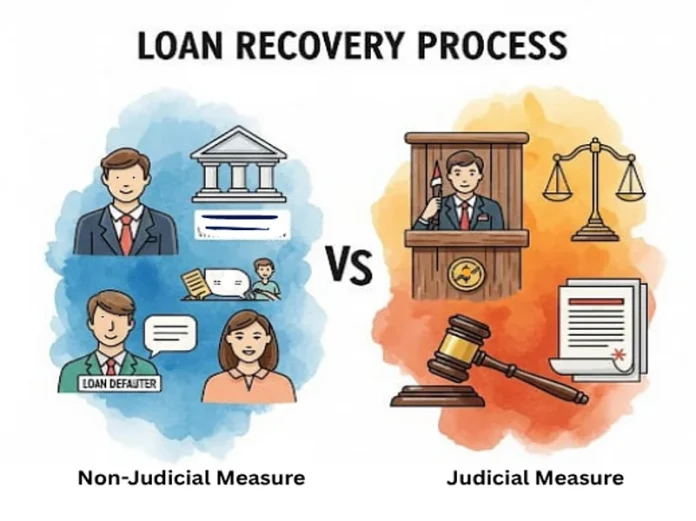
B Mirror Report: Private bank owners have urged the government to strengthen laws to accelerate the recovery of defaulted loans and address irregularities in the banking sector following what they described as large-scale financial mismanagement during the previous political regime.
The demand was raised on Tuesday during a meeting between Finance Minister Amir Khosru Mahmud Chowdhury and a delegation of the Bangladesh Association of Banks (BAB) at the Secretariat ahead of the upcoming national budget.
The delegation was led by BAB Chairman Abdul Hai Sarker. Speaking to reporters after the meeting, Sarker said bank owners proposed stricter legal provisions requiring loan defaulters to appear physically before courts instead of being represented solely by lawyers.
According to him, many defaulters who have fled abroad are avoiding loan repayments while continuing legal proceedings through representatives, causing lengthy delays in recovery efforts.
“If the government toughens the laws, at least 60 percent of bad loans can be recovered very easily,” Sarker said.
The bank owners also proposed amendments to regulations governing the number of family members allowed to serve as directors of a bank.
During the meeting, BAB members urged the government to take steps to restore public confidence in the banking sector.
Sarker said the finance minister assured the delegation that the government would follow international best practices in reforming the banking industry and take necessary measures to eliminate irregularities.
Earlier in the day, the finance minister also held a meeting with a delegation from the Foreign Investors’ Chamber of Commerce and Industry (FICCI), led by its President Rupali Haque Chowdhury.
The discussion focused on the upcoming FY2026–27 national budget, the country’s investment climate, and measures needed to attract greater foreign direct investment (FDI).
FICCI leaders called for a predictable and business-friendly policy environment, emphasizing the importance of a long-term budget framework, competitive tax policies, policy consistency, and transparency to strengthen investor confidence.
Rupali Haque Chowdhury said the meeting also addressed concerns over the effective corporate tax burden, noting that despite relatively low nominal rates, businesses still face high effective taxation due to non-deductible expenses and administrative complexities.
She also stressed the need to broaden the tax base instead of increasing pressure on existing taxpayers, a proposal that, according to her, received a positive response from the finance minister.
FICCI Senior Vice-President Deepal Abeywickrema, Vice-President Mohammad Iqbal Chowdhury, and other board members were also present at the meeting.


