

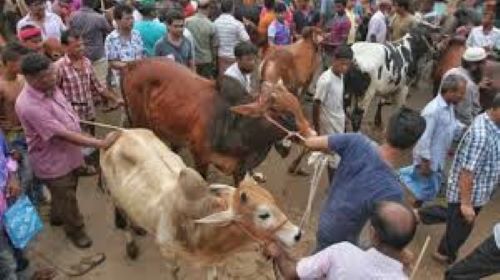
B Mirror Report: Eid-ul-Azha celebrations are underway across the country, but the festive mood has been dampened for cattle farmers and traders due to losses in the livestock market.
At Dhaka’s Gabtoli cattle market, a large number of unsold animals were seen being loaded back onto trucks as buyers remained fewer than expected in the final hours of trading, while the supply of cattle remained high. Many traders were forced to return home with their livestock.
From around 9:30 am to 12:30 pm on Thursday (May 28), traders were seen continuously loading unsold cattle onto trucks. Some also struggled to find transport amid congestion at the market.
A trader from Manikganj said he brought 50 cattle but managed to sell only 18, while the remaining animals had to be taken back. “This time, we have sacrificed along with our cattle,” he said, expressing deep frustration over the losses.
Another trader reported that out of 40 cattle, 20 remained unsold. He added that animals previously valued at around Tk 3.8 lakh were eventually sold for about Tk 2.7 lakh. “We bought cattle on loans and had to sell at low prices just to repay debts,” he said.
Farmers and traders alleged that several days of rain left the market muddy, increasing the risk of illness among livestock. As a result, many were forced to sell at significant losses, with some claiming losses exceeding Tk 1 lakh per animal.
Meanwhile, falling prices have brought some relief for buyers. Many said cattle prices dropped by up to Tk 20,000 per lakh compared to the day before Eid.
A buyer said a cow previously priced at Tk 4.2 lakh was purchased for Tk 2.7 lakh, while others noted a noticeable decline in prices since the eve of Eid.
Traders claimed that although the supply of sacrificial animals was sufficient this year, the lack of buyers in the final days led to a sharp price decline. Prices reportedly began falling from early Wednesday (May 27).
According to the Department of Livestock Services, over 9.1 million animals were sacrificed last Eid-ul-Azha, while this year the number of sacrificial animals is estimated at 12.33 million against a projected demand of around 10.1 million.

