

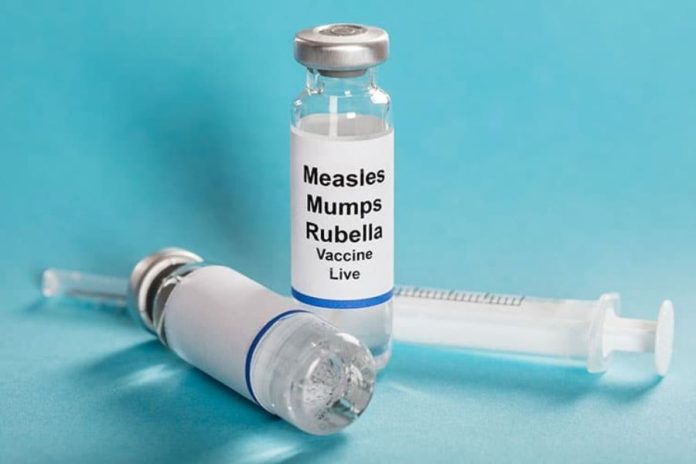
B Mirror Report: Health Minister Sardar Md Sakhawat Husain has said that the lack of measles vaccination over the past eight years has led to the recent outbreak of the disease in Bangladesh.
Speaking to journalists on Sunday after inaugurating the International Pharmaceutical Industry Fair at the Bangladesh-China Friendship Conference Centre in Purbachal, the minister said the government has allocated Tk 6.04 billion to procure measles vaccines. The purchase has already been approved, and distribution will begin once the vaccines arrive.
He noted that measles infections have risen sharply, with higher numbers of cases reported in Dhaka, Mymensingh, Rajshahi, Pabna, Chattogram, Jashore, and Natore, although the disease has spread across the country.
The outbreak was first detected on January 4 in a Rohingya camp in Cox’s Bazar, followed by an alert issued on January 10. Around the same time, cases also began to emerge in slum areas of Dhaka.
To address the situation, the government has strengthened healthcare facilities. Hospitals including the Infectious Diseases Hospital, Dhaka Shishu Hospital, DNCC Dedicated Hospital, and Dhaka Medical College Hospital have been equipped with ICU facilities and ventilator support. Additional arrangements have also been made in Manikganj and northern regions.
The minister said the government received five ventilators as donations after several child deaths linked to ICU shortages at Rajshahi Medical College Hospital. He added that more than 12 additional ventilators are expected to be supplied soon by pharmaceutical companies.
According to reports, 33 children died within 11 days at Rajshahi Medical College Hospital due to a shortage of ventilators. Between March 10 and 24, at least 44 children undergoing treatment also died after failing to secure ICU admission.
Health officials said children receive the first dose of the measles vaccine at nine months and the second at 15 months, while vaccination campaigns target children aged between nine months and 10 years. The last nationwide campaign was held in 2020, aiming to vaccinate around 34 million children, while the previous one took place in 2014.
Health experts believe the outbreak is largely due to vaccine shortages and gaps in immunisation coverage, with many children missing vaccinations due to a lack of healthcare workers.

