

Bangladesh’s natural gas crisis has intensified, with power plants receiving only 29% of their total gas demand and fertiliser factories getting just 38%, severely disrupting electricity generation and domestic fertiliser production.
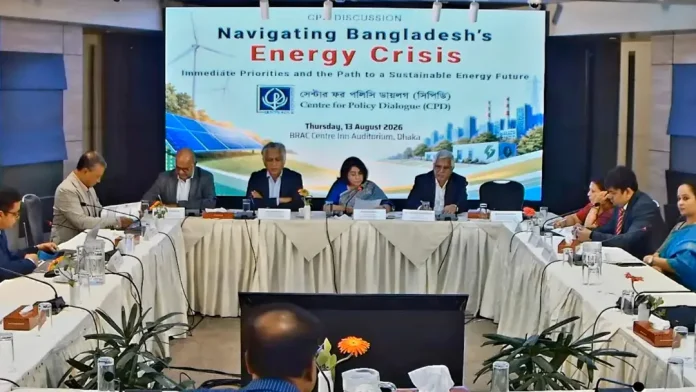
The alarming figures were presented at a discussion titled “Addressing Bangladesh’s Energy Crisis: Immediate Priorities and a Path Towards a Sustainable Energy Future”, organised by the Centre for Policy Dialogue (CPD) at BRAC Centre Inn in Dhaka on Thursday.
CPD said the country is currently facing a daily gas shortfall of 1,200–1,400 million cubic feet (mmcfd). Declining domestic gas production and difficulties in importing sufficient liquefied natural gas (LNG) amid volatility in international markets have aggravated the situation.
As gas supplies remain inadequate, several power plants are being forced to operate partially or shut down, contributing to increased power disruptions across the country. Reduced gas supplies to fertiliser plants are also hampering domestic urea production, raising concerns about fertiliser shortages during the upcoming agricultural season and greater dependence on imports.
The crisis has also placed significant pressure on the government’s finances. Due to soaring LNG prices, Petrobangla’s LNG subsidy bill has nearly tripled to Tk16,600 crore, compared with the Tk6,000 crore allocation for the LNG sector in the 2025-26 fiscal year.
The geopolitical situation in the Middle East has further complicated Bangladesh’s energy supply. Disruptions to shipping through the Strait of Hormuz have reportedly reduced contracted LNG supplies from Qatar by nearly half.
To compensate for the shortfall, Petrobangla has been purchasing LNG from the international spot market. However, spot LNG prices have risen sharply from around $10 per million British thermal units (MMBtu) to $15.88–$16.98, substantially increasing the financial burden on the government.
Presenting the keynote paper, CPD Senior Research Associate Fakhruddin Al Kabir highlighted the scale of the country’s gas supply shortage and its implications for the power and agricultural sectors.
CPD Executive Director Fahmida Khatun said energy is essential for keeping the economy operational, as industries, offices and households cannot function normally without reliable energy supplies.
“We have reached a situation that has resulted from multiple factors. But the reality is that we are now in the middle of this crisis,” she said, stressing that immediate measures have become more important than medium- and long-term energy planning.
She warned that unless reliable energy supplies are ensured, Bangladesh’s broader economic targets—including increasing investment, creating employment and building a trillion-dollar economy—could become unrealistic.
CPD also highlighted the country’s growing dependence on imported LPG. According to the organisation, around 98.7% of total LPG demand is currently being met through imports, while the government sector accounts for less than 1% of supply.
The organisation said the severe shortage of pipeline gas and suspension of new gas connections have made LPG increasingly important for household cooking. Heavy dependence on international markets, however, is creating additional risks for the country’s household energy security.
Energy expert Dr Ijaz Hossain, Apex Footwear Managing Director Syed Nasim Manzur, Bangladesh Independent Power Producers Association President David Hasnat, and representatives and experts from relevant sectors attended the discussion.


