

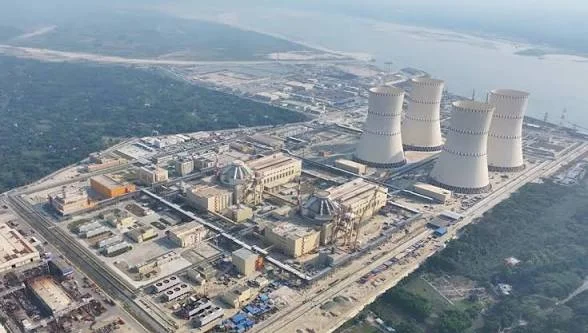
The first batch of nuclear fuel required for the first refuelling of Unit 1 at the Rooppur Nuclear Power Plant has been delivered, while Russia’s state-owned nuclear corporation Rosatom has begun supplying fuel for the initial loading of Unit 2.
The information was disclosed in a press release issued by Rosatom’s appointed public relations department in Bangladesh on Thursday (October 29).
According to the statement, Rosatom’s engineering division completed the initial nuclear fuel loading into the VVER-1200 reactor of Unit 1 in 2026. Earlier this month, the reactor reached its minimum controllable power level, marking a significant milestone towards electricity generation.
Following the completion of the first fuel cycle, fresh nuclear fuel required for the reactor’s refuelling was transported to Bangladesh from Siberia, Rosatom said.
Meanwhile, the delivery process for the initial fuel loading of Unit 2 has begun. The first shipment of fuel assemblies, manufactured at the Novosibirsk Chemical Concentrates Plant under Rosatom’s fuel division, recently arrived in Bangladesh aboard a special cargo aircraft.After reaching the designated facility at Rooppur, the fuel containers were transferred to a specialised fuel storage facility. Each fuel assembly will undergo mandatory visual and instrumental inspections to ensure compliance with technical specifications and nuclear safety requirements.
A joint commission comprising representatives from Bangladesh, the main contractor and the fuel manufacturer will conduct the inspections in accordance with strict nuclear and radiation safety regulations, the statement said.
Rosatom added that the respective units must undergo a series of gradual power-raising tests and obtain the necessary regulatory approvals before being connected to the national grid and proceeding to trial commercial operation.
The Rooppur Nuclear Power Plant, Bangladesh’s first nuclear power facility, features two advanced third-generation VVER-1200 reactors designed by Russia, with a combined generation capacity of 2,400 megawatts. Rosatom’s engineering division is serving as the project’s principal designer and general contractor.

