

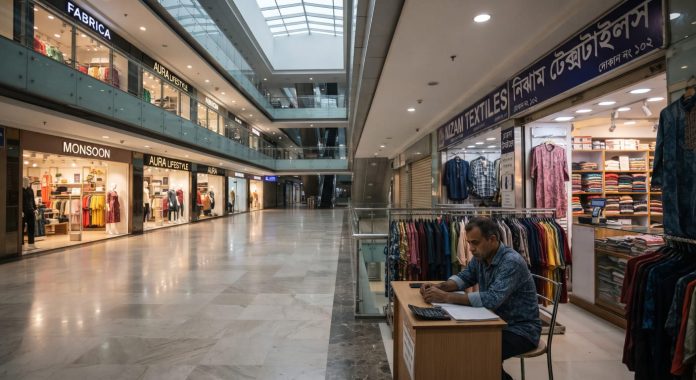
B.Mirror Desk: Once, the shopping malls of Dhaka were vibrant, filled with bright lights and the constant movement of shoppers. Today, however, they are gripped by stagnation and despair. Shopping centers such as Rapa Plaza, East Plaza, Plaza A.R., Orchid Point—and even Karnaphuli Garden City, which recently closed its doors—are facing a profound crisis. Shop owners wait for hours, yet the customers they desperately need never arrive. In many stores, the day’s first sale does not occur until well past midday. This prolonged downturn is not merely eroding the capital invested by business owners; it is pushing them toward a deep humanitarian and financial crisis. Such a situation did not emerge overnight; it is the result of a complex interplay of factors. This report explores these underlying causes. According to analysts, the collapse of the capital’s traditional shopping malls cannot be attributed to a single cause; rather, it is the cumulative effect of multifaceted economic and social shifts. The primary factors are outlined below:
The Soaring Popularity of Online Commerce: The convenience of having desired products delivered directly to one’s doorstep, combined with the rise of shopping via social media pages and e-commerce platforms, has drawn a significant portion of the consumer base away from physical shopping malls. Online retailers often avoid the high costs of renting large showrooms or maintaining a large staff, allowing them to sell goods with smaller profit margins.
Affordable Markets on Sidewalks: With trendy clothing and cosmetics available at budget-friendly prices on sidewalks across the city, many consumers—particularly those with limited or middle-class incomes—are turning toward these street-side markets instead of traditional shopping malls. General Inflation and Rising Cost of Living: Given the current economic climate and high inflation, a large share of people’s income is now consumed by essential expenses, such as house rent, utility bills, and food. Consequently, many have cut back on ‘luxury’ or non-essential spending, such as purchases of clothing or decorative items. High operational costs (shop rent and service charges): In upscale malls, businesses must consistently cover steep shop rents, electricity bills, generator expenses, and staff salaries. Even during periods of sluggish sales, these fixed costs remain, trapping business owners in a cycle of debt. The collapse of Karnaphuli Garden City (a cautionary tale): Established in 1998 at the Shantinagar-Kakrail intersection, the iconic Karnaphuli Garden City Shopping Complex was officially closed on October 1st, unable to withstand prolonged losses, a lack of customers, and the burden of unpaid bills. This serves as a stark warning for businesses in other malls. Losses for business owners and a humanitarian crisis: This downturn has not only caused financial losses for business owners but has also severely impacted their daily lives and mental well-being: Mounting debt and erosion of capital: To cope with years of losses, many business owners have borrowed large sums from banks, relatives, or private lenders. Even with inventory worth 1.5 to 2 million BDT in their shops, a lack of liquid cash leaves them unable to repay these debts. The struggle to sustain families: The families of small and medium-scale business owners rely entirely on this income. With earnings from their shops drying up, they are finding it impossible to pay rent, cover their children’s educational expenses, or ensure access to healthcare. Shrinking employment: Many shop owners have been forced to reduce their workforce or shut down their businesses permanently. As a result, the livelihoods of thousands of sales staff and employees are now in jeopardy. Remedies and steps to overcome this crisis: It is imperative to take comprehensive and timely measures to save this traditional commercial sector and protect the livelihoods of the hundreds of thousands of people who depend on it. Rationalization of Rent and Service Charges: In light of the current economic downturn, the market authorities and the shop owners’ association should collaborate to significantly reduce or restructure shop rents, charges for air conditioning and generators, and other service fees. Digital Transformation (Omnichannel Strategy): Moving beyond traditional business models, merchants should integrate their operations with online platforms. Shopping malls could leverage modern technology by launching a collective online page or mobile application for their constituent shops. Enhancing Mall Appeal and Diversifying Amenities: To draw customers back, shopping malls should offer more than just retail—incorporating features such as food courts, family entertainment zones, and engaging events. Incentives and Accessible Financing: Banks and financial institutions could provide long-term, low-interest loans or incentive packages for small and medium-sized enterprises (SMEs), helping them navigate this challenging period. Restoring Consumer Confidence through Special Discounts and Events: Strategic marketing campaigns—featuring attractive discounts and joint promotional activities during festivals or specific seasons—should be implemented to entice shoppers to return to the malls. The collapse of these shopping malls is not merely the failure of a few business enterprises; it reflects a contraction of the middle-class economy and a deep structural crisis within the retail sector. Without the timely implementation of appropriate policy support, effective cost-reduction measures, and the adoption of a modern, forward-looking mindset by business owners, these once-vibrant shopping hubs risk becoming a thing of the past.
Business Downturn in the Capital’s Upscale Shopping Malls
Date:
Post View:
Business Downturn in the Capital’s Upscale Shopping Malls


More like thisRelated
AB Bank inaugurates its shifted Austagram Branch

AB Bank PLC. has recently shifted its Austagram Branch...
PM expected to open two-day solar expo in Dhaka
Prime Minister Tarique Rahman is expected to inaugurate Bangladesh's...
BB plans AI-based cybersecurity policy
Bangladesh Bank is planning to introduce an artificial intelligence...
DSE turnover gains 13.88pc as key index continue downward trend
Trading activity on the Dhaka Stock Exchange (DSE) picked...