

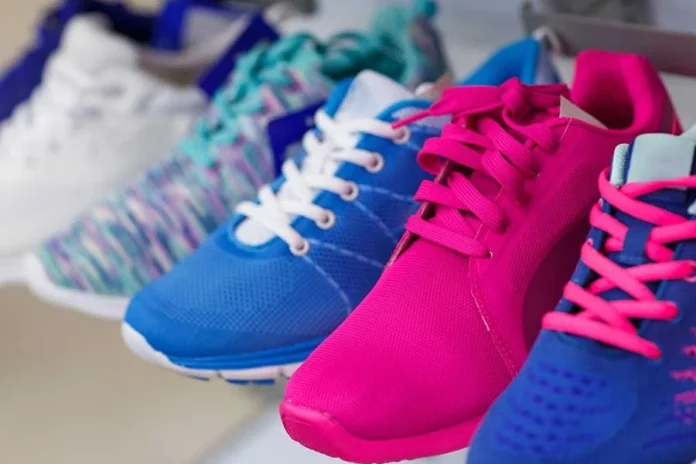
The demand for leatherless shoes or non-leather footwear is increasing worldwide due to their fashionable, durable and affordable prices. Exports of this product from Bangladesh have also been increasing continuously for several years. Leatherless shoes have shown a big surprise in exports in the first half of the current fiscal year.
According to the Export Promotion Bureau (EPB), leatherless shoes worth US$ 273.9 million were exported in the first six months of the current fiscal year 2024-25 (July-December). This export is 39.10 percent more than the same period of the previous fiscal year. In the first half of the last fiscal year 2023-24, leatherless shoes worth US$ 196.9 million were exported.
Leather less shoe exporters say that the majority of leatherless shoe exports from Bangladesh go to the European Union (EU). Due to high inflation after the start of the Russia-Ukraine war, people in Europe reduced their purchases of non-essential items. Due to this, the export of leatherless shoes decreased in the 2022-23 fiscal year. If inflation starts to decline, exports will increase slightly in the next fiscal year. On the other hand, foreign buyers are shifting orders from China, the world’s top shoe exporter, for various reasons. For that reason, Bangladesh received additional orders last year. Therefore, overall, there has been good growth in the first half of the current fiscal year.
Bangladesh’s shoe industry is bringing in export revenue of about 1 billion or 1 billion dollars. In the last fiscal year 2023-24, shoes worth 960 million dollars were exported. Of this, non-leather shoes were worth 416.8 million dollars. Before Corona, the export of such shoes was 270 million dollars in the fiscal year 2018-19. It increased to 450 million dollars in the next three years. Due to the Russia-Ukraine war and its impact on high inflation in the United States and EU countries, exports decreased to 380 million dollars the next year. Then it started to increase again.
However, Bangladesh’s share in the global shoe export market is still very small. China is the top exporter of shoes. The country accounts for 60 percent of the total shoe export in the world. Then there are Vietnam, Indonesia, Germany, Turkey, India, Belgium, Italy, Cambodia and Spain.
According to World Footwear, 22.4 billion pairs of shoes were produced in different countries of the world in 2023. Of this, 14 billion pairs of shoes were exported. The financial value of which is 168 billion or 168 billion dollars. And a large part of the exported shoes are leatherless. The company has not yet released the information on the production and export of shoes for the outgoing year.
In 2023, 63.8 percent of global shoe exports were in China. The country exported 8.96 billion pairs that year. Of the next top 9 countries, Vietnam exported 1.34 billion pairs, Indonesia 45, Germany 35, Turkey 30, India 26, Belgium 22, Italy 19, Cambodia 160 million and Spain 150 million pairs.
Although not in the top ten in shoe exports, Bangladesh ranks ninth among the top consumer countries of the product in the world. In this regard, China is at the top. India is second. In 2023, there was a demand for 3.53 billion pairs of shoes in China, 256 million in India, 193 million in the United States, 77 million in Brazil, and 61 million pairs in Japan. That year, the demand for shoes in Bangladesh was 350 million pairs.
The National Polymer (Npoly) Group has built an environmentally friendly factory in Bhaluka, Mymensingh, to export non-leather shoes to the country. The Npoly Footwear (formerly known as Shuniverse Footwear) factory produces 360,000 pairs of shoes per month. The monthly export of shoes is worth 2.5 million dollars. Three thousand workers work here.
The capacity was doubled four months ago due to the potential for exports, said Riyad Mahmud, Managing Director of Npoly Group. Yesterday, he told media, “There are purchase orders according to the factory’s full capacity until next March. If there are such purchase orders in the coming days, we are planning to run the factory in two shifts. That will double production.
In response to another question, Riyad Mahmud said, “After the shock of Corona, many foreign purchasing organizations started moving purchase orders from China. We have benefited from that to some extent. After Donald Trump wins, new purchase orders will move from China. Bangladesh is being looked at because of its relatively cheap labor. Chinese businessmen also want to invest. If there is political stability, investment will also come. To make non-leather shoes a major export sector in the future, investment in the production of necessary raw materials for shoes within the country must be increased. In addition, emphasis must also be placed on developing skilled manpower.”


