

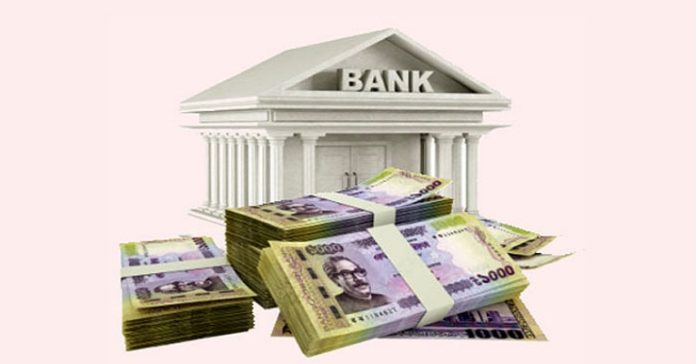
Over the past six months, there has been a significant shift in Bangladesh’s banking industry, with a significant amount of the public’s money going back to the banks. About 34,500 crore taka were added to the banking sector in the six months from July to December of last year, according to a January 2025 report on Bangladesh’s banking industry. Bank deposits rose from 17,42,798 crore taka in June of last year to 17,77,315 crore taka in these six months.
Numerous factors are being cited by analysts as the primary cause of the significant return. The shift in the nation’s political landscape in the middle of last year is one of these causes. Following the July–August 2023 student-public uprising, customers were more likely to take money out of banks. As a result of their fear for the banks’ future, many customers withdrew their money. Customers then began returning their money to the banking system as the political climate somewhat stabilized.
In addition, people involved in the banking sector say that interest rates in banks have also increased, which is providing an incentive for customers to keep their money in banks. This is bringing in more deposits, while the amount of cash outside banks is decreasing.
According to data from Bangladesh Bank, the amount of cash in people’s hands outside banks was Tk 2,90,436 crore in June 2023. By the end of December, it had decreased to Tk 2,76,341 crore. According to this calculation, about Tk 14,000 crore has returned to the banking system in a span of 6 months, which is seen as a positive signal in the country’s economic outlook.
Bank loans have also increased in the interim; in December, they totaled Tk 1,72,589 crore. In other words, banks have disbursed roughly 96% of their deposits as loans, which can be useful in contributing to the economy.
According to analysts, if this pattern persists, Bangladesh’s economy will grow stronger and the banking industry will become even more stable.

