

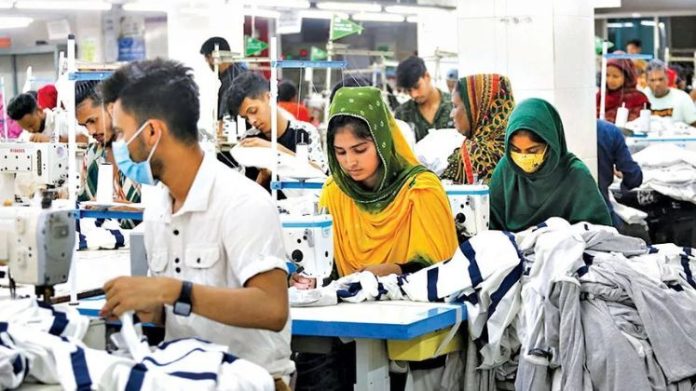
BM Desk : The foundation of Bangladesh’s export economy, the ready-made garment (RMG) sector, is facing increasing difficulties as 258 export-oriented companies have shut down in the last 12 months, according to the Bangladesh Garment Manufacturers and Exporters Association (BGMEA).
BGMEA President Mahmud Hasan Khan Babu made the announcement at an emergency news conference Tuesday at the BGMEA headquarters in Uttara. He claimed that the industry as a whole is under a great deal of stress due to continuous labor unrest and frequent production disruptions.
“Movements organized in the name of securing workers’ rights have often led to production shutdowns,” Babu said. “Dissatisfaction in one area quickly spreads to other industrial zones, making it extremely difficult for entrepreneurs to restore normal operations.”
The BGMEA president voiced concern over a recent advisory council decision allowing the formation of trade unions with only 20 workers, warning that such a move could further destabilize the sector.
“This decision could encourage small, fragmented unions, increasing instability in the industrial sector,” he cautioned.
Babu also warned that Bangladesh’s planned graduation from Least Developed Country (LDC) status could weaken the nation’s competitiveness if not paired with strong energy supply and business-friendly reforms.
“Without ensuring uninterrupted energy and a supportive business environment, LDC graduation will reduce competitiveness, discourage investment, and hurt export earnings,” he said.
He further cautioned that the proposed Bangladesh Labour (Amendment) Ordinance 2025, if implemented “irrationally,” could drive away foreign investors, destabilizing the broader industrial landscape and economy.
Criticizing the government’s decision to raise Chattogram Port fees by 41% without expanding capacity, Babu termed the move “unreasonable” and warned it could deal a serious blow to export trade.
He also expressed reservations about the planned workers’ welfare fund and universal pension scheme, saying these initiatives would likely increase administrative costs, create management challenges, and add further pressure on industries.
Concluding his remarks, the BGMEA president urged the government to engage industry leaders before introducing new policies.
“If the government prioritizes foreign investors over local entrepreneurs, new crises will emerge in trade and business,” he said. “The chief adviser must take responsibility for any resulting economic losses.”
The BGMEA’s warning highlights growing uncertainty in Bangladesh’s RMG sector, which employs millions and contributes more than 80% of the country’s total export earnings.

 sector, is facing increasing difficulties)