

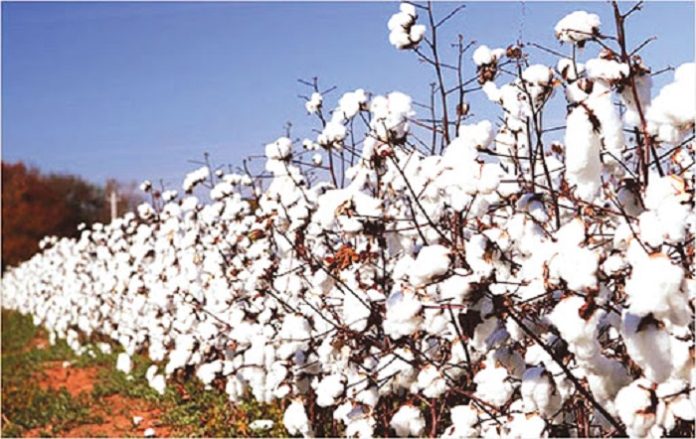
Kushtia District Correspondent: In the soft glow of the early morning sun, Dharmah village of Adabaria Union in Daulatpur upazila of Kushtia appears bathed in white light. Field after field of blooming cotton creates a scene that looks as if nature itself has spread a pristine white sheet across the landscape. Where farmers once struggled with uncertain crops and limited incomes, cotton fondly called “white gold” by locals—is now reshaping lives and livelihoods.
Cotton is no longer just an agricultural product in Daulatpur; it has become the driving force of the area’s economic transformation. Regular technical support from the Cotton Development Board, improved seed varieties, and comparatively favorable market prices have given rise to a new story of opportunity in this border-adjacent upazila.
According to the Cotton Development Board, Kushtia district ranks first in cotton production in the country, with Daulatpur upazila leading within the district. Dharmah village of Adabaria Union has already gained recognition as one of the country’s top cotton-producing areas. In the current season, cotton has been cultivated on about 4,895 hectares of land in the Kushtia Cotton Development Zone, which includes Kushtia and Meherpur districts. Of this, 2,434 hectares nearly half of the total are in Daulatpur alone.
Government incentives and planned support have played a key role in this success. During the current season, 2,050 farmers in Daulatpur have received seeds, fertilizers, training, and technical assistance. Farmers are cultivating various hybrid varieties, including White Gold-1 and 2, Rupali-1, DM-4, as well as board-developed CB hybrids and local Upland cotton varieties. On average, more than 3,000 plants can be grown per bigha, and with proper care, yields can reach 15 to 16 maunds.
Although cotton farming is a long-duration crop, farmers consider it profitable. Seeds are usually sown in July–August, while harvesting continues from late December to February. As cotton can be sold through local ginning mills at government-fixed prices, market risks remain relatively low. Currently, cotton is selling at around Tk 4,000 per maund.
Farmer Lavlu of Dharmah village said, “It costs Tk 20,000 to 22,000 per bigha, but if the yield is good, cotton worth Tk 75,000 to 80,000 can be sold. No other crop gives such returns.” Like him, many farmers are now choosing cotton as their main crop.
However, challenges remain alongside the potential. Higher labor costs for weed control and cotton picking are increasing production expenses. Farmers also complain that limited buyers reduce competition in the market, leaving little scope for higher prices.
Former Adabaria Union Parishad chairman and cotton farmer Md Rustam Ali said, “If incentives are provided for modern harvesters and weed-control machines, costs will come down and production will increase.”
Sheikh Al Mamun, Chief Cotton Development Officer of the Kushtia Cotton Development Board, said more than 2,000 people in Dharmah and surrounding villages are directly involved in cotton farming. He added that efforts are ongoing to support farmers through regular training and incentives.
Bangladesh is the world’s second-largest cotton importer. Md Qutub Uddin, Deputy Director of the Cotton Development Board, said the program aims to increase domestic cotton production to reduce dependence on imports. “In the current season, Tk 180 million has been distributed nationwide as incentives,” he added.
Stakeholders hope that cotton production from Daulatpur alone will reach nearly Tk 1 billion this season. Beyond supplying raw materials to the country’s textile industry, this “white gold” is

