

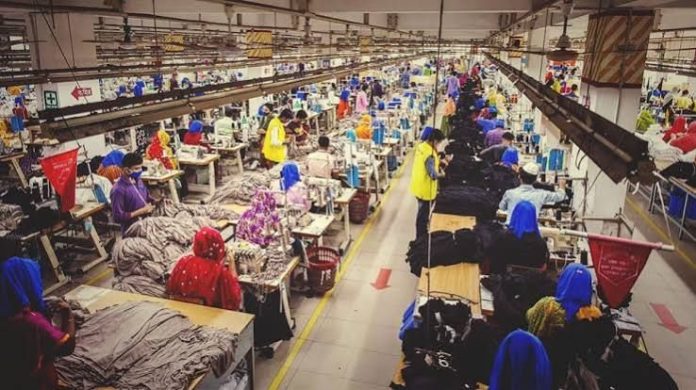
Bangladesh’s textile sector, built over the past three decades through more than $32 billion in local and foreign investment, is now facing a severe survival crisis amid rising production costs, policy weaknesses and growing competitive pressure.
The sector, widely regarded as the foundation and key backward linkage of the country’s ready-made garment industry, has been struggling with fuel shortages, expensive financing, declining orders and increased import pressure.
Shawkat Aziz Russell, president of the Bangladesh Textile Mills Association (BTMA), said around 150 member mills have shut down completely over the past six months, leaving approximately 120,000 workers without jobs and directly affecting a similar number of families.
The closures have reduced domestic yarn and fabric production, leaving a significant portion of the sector’s production capacity idle. This has increased dependence on imported yarn and fabrics. At the same time, Bangladesh’s garment exports declined by around 1.64 percent, equivalent to approximately $650 million.
Russell warned that continued mill closures could further weaken the country’s backward linkage industry, increase production costs, reduce export competitiveness and create additional economic pressures.
Mustafizur Rahman, distinguished fellow at the Centre for Policy Dialogue (CPD), said prolonged gas and power shortages, high energy costs, rising bank lending rates and global and domestic challenges have pushed the textile and apparel industries into an existential crisis.
According to him, production capacity in the sector has fallen by around 30–40 percent, while many factories have either closed or been forced to reduce their workforce.
Industry leaders identified inadequate energy supplies, rising production costs, policy inconsistencies, import pressure, declining orders and financial constraints as the major factors behind the crisis.
Insufficient gas and electricity supplies have severely disrupted production at dyeing, printing and spinning mills. Meanwhile, higher global prices for raw materials, petrochemicals and freight have increased the cost of producing yarn and garments.
A dispute between local textile mills and garment exporters over duty-free yarn imports under bonded warehouse facilities has also added to market instability, according to industry representatives.
Global economic uncertainty and geopolitical tensions have reduced new orders from international brands. High borrowing costs and repayment pressures have particularly affected small and medium-sized textile mills.
Taskin Ahmed, vice chairman of IFAD Group and president of the Dhaka Chamber of Commerce and Industry (DCCI), said higher bank interest rates, increased gas and electricity prices and the depreciation of the taka have significantly raised production costs.
“These additional costs are pushing textile mills out of competition not only in international markets but also in the domestic market,” he said.
According to industry data, the textile sector directly and indirectly supports employment for around 2 million workers. Local textile mills supply nearly 100 percent of the yarn required by Bangladesh’s knitwear industry and around 80 percent of the yarn used by the woven garment sector.
Industry leaders warn that a weakened textile sector could therefore put the entire garment supply chain at serious risk.
After the elected government assumed office, BTMA President Shawkat Aziz Russell and other textile entrepreneurs held meetings with Prime Minister Tarique Rahman, Finance Minister Amir Khasru Mahmud Chowdhury and other policymakers, seeking urgent measures to address the sector’s problems.
At these meetings, industry representatives highlighted the growing competitive advantage of Indian textile producers, who receive substantial subsidies and incentives from their government. They alleged that Indian yarn is entering Bangladesh at prices below local production costs, raising concerns about possible dumping.
Industry stakeholders said yarn imports from India increased by around 48 percent over the past year, posing a major threat to domestic producers.
BTMA has already held several meetings with the Ministry of Commerce, Ministry of Finance and the National Board of Revenue (NBR) to seek policy support.
The association argues that the textile sector is the foundation of Bangladesh’s garment industry and that weakening this foundation could put the broader economy at risk.
To address the crisis, textile producers have proposed increasing incentives for domestic yarn sales for the next five years. They have also proposed making it mandatory for export-oriented garment manufacturers to source at least 50 percent of their yarn from domestic mills.
The industry believes such measures would help sustain domestic textile production while strengthening the garment sector’s supply chain.
BTMA has also called for stricter monitoring and punitive measures to prevent yarn and fabrics imported under bonded facilities from being sold on the open market.
The association warns that without stronger policy support and market protection, more than half of Bangladesh’s textile mills could shut down by the end of 2026, putting billions of dollars in investment, millions of jobs and the country’s leading export sector at significant risk.

