

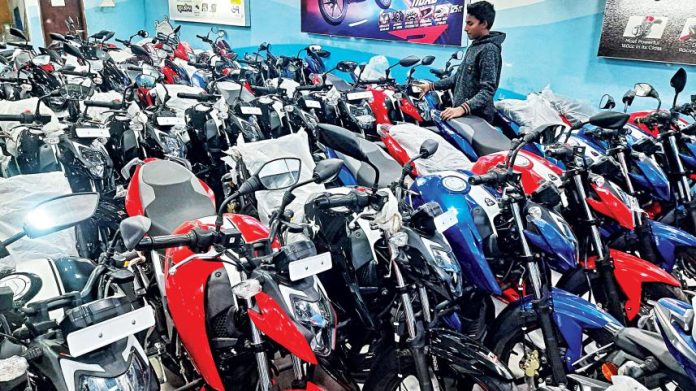
B Mirror Report: The motorcycle industry in Bangladesh is experiencing slower sales as consumer confidence weakens due to fuel supply concerns and global geopolitical tensions, despite a temporary boost from Eid-ul-Fitr promotions.
Industry insiders say nearly 20 per cent of potential buyers have delayed their purchase plans amid uncertainty surrounding fuel availability. Panic buying, long queues at petrol pumps and informal rationing in some areas have made consumers more cautious.
Biplob Kumar Roy, General Secretary of the Bangladesh Motorcycle Assemblers and Manufacturers Association (BMAMA) and CEO of TVS Auto Bangladesh Ltd, said the prevailing situation has significantly influenced buying behaviour.
He warned that continued tensions in the Middle East could disrupt supply chains, increase logistics costs and further impact the sector. The industry is monitoring developments closely and may seek government support if needed.
Retailers noted that special Eid offers helped sustain some sales, but overall performance fell short of expectations. Jahidul Alam Rintu, a senior sales executive at Honda Café, said sales dropped by 10 to 15 per cent despite seasonal promotions. Without the Eid boost, the decline could have been much sharper.
Fuel shortages have emerged as a key challenge. Mohammad Abu Hanif, Chief Business Officer of Runner Automobiles, said sales of fuel-powered scooters declined by 15 per cent in March alone due to the ongoing crisis.
A senior official of a leading manufacturer, requesting anonymity, said overall sales fell by about 4.0 per cent in March compared to February, even though the Eid season typically drives higher demand.
The sector, which has attracted over Tk 100 billion in investment and supports around 200,000 jobs, remains a significant contributor to the economy. Seven major companies, including global brands and local manufacturer Runner, are operating at full capacity, bringing the country close to self-sufficiency in motorcycle production.
However, analysts warn that external shocks continue to expose structural vulnerabilities. Dr Masrur Reaz, Chairman and CEO of Policy Exchange Bangladesh, said prolonged geopolitical conflict could lead to higher fuel prices, increased import costs and reduced consumer confidence, further dampening sales.
He suggested that both industry players and policymakers should closely monitor the situation and consider targeted measures to stabilise the market.
According to sector data, Bangladesh aims to produce one million motorcycles by 2027. Currently, motorcycle usage remains relatively low compared to regional peers, indicating potential for future growth once market stability returns.

