

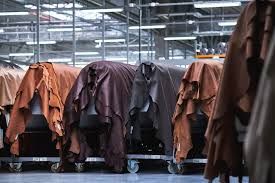
Leaders and experts in Bangladesh’s leather sector have called for urgent government intervention, warning that rising financial costs, weak infrastructure and policy bottlenecks are pushing the industry into a serious crisis.
They made the remarks at a discussion titled “Leather Industry in Existential Crisis: Finding the Way Out” held on Saturday at the Economic Reporters Forum auditorium in Dhaka, organized by the Leather Industry Development Foundation of Bangladesh (LIDFB).
Speakers said the leather and leather goods sector holds the potential to generate between US$25 billion and US$30 billion annually if supported through coordinated reforms, modern infrastructure development and export-friendly policies. They added that Bangladesh could become a major global leather sourcing hub with timely policy action and improved supply chain management.
The programme was chaired by LIDFB Convener Shadat Hossain Selim and moderated by Secretary Muhammad Shafiqur Rahman. A 13-point proposal was presented aiming to transform the sector into a globally competitive export-oriented industry.
Key recommendations included the establishment of either a separate leather ministry or an autonomous leather board to ensure faster policy implementation and better coordination. Participants also stressed the need for modern leather collection centres and temporary cold storage facilities, particularly during Eid-ul-Azha, to reduce raw hide wastage.
For the upcoming Eid-ul-Azha, industry leaders proposed expanding Dhaka’s leather collection zones to nearby districts including Narayanganj, Munshiganj and Narsingdi to strengthen the supply chain.
Business leaders also raised concerns over high financial costs and dependence on bank loans, claiming that banks absorb up to 15 percent of sector-related earnings, leaving minimal profit margins for entrepreneurs. They demanded easier SME financing, special export incentives, and more supportive banking policies, along with rehabilitation measures for struggling tannery units.
The discussion further suggested establishing a dedicated “Leather Footwear City” to boost production capacity, employment opportunities, and export growth.
Speakers also highlighted the traditional role of madrasa-based communities in the leather trade during sacrificial festivals, while criticizing arbitrary local price-setting practices and noting that international leather prices are typically determined by global supply and demand.
Lawmakers, academics, religious leaders, and representatives from tannery, manufacturing, footwear associations, Hefazat-e-Islam Bangladesh, and the Qawmi Madrasa Education Board also attended the event.


