

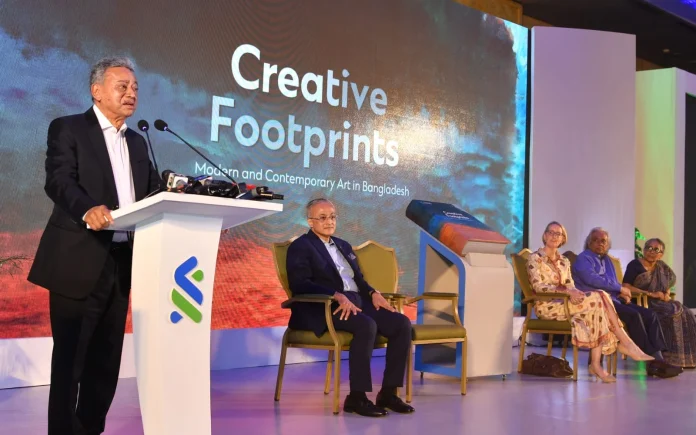
The government aims to turn creative industries into a mainstream economic sector, leveraging arts, culture and traditional craftsmanship to drive economic growth, create jobs and enhance Bangladesh’s global influence, Finance Minister Amir Khosru Mahmud Chowdhury said on Saturday.
“Arts and culture, rural handicrafts, music, films and theatre must be integrated into mainstream economic activities to become key drivers of the country’s future GDP growth and strengthen Bangladesh’s soft power internationally,” he said.
The finance minister made the remarks as the chief guest at the unveiling ceremony of the book Creative Footprints, jointly organised by Standard Chartered Bank and Bengal Foundation at a city hotel.
According to a Finance Ministry press release, Amir Khosru said traditional economic policies had often placed arts and culture behind other sectors. The government now wants to change that approach by recognising the creative economy as a key contributor to the country’s economic aspirations.
He said developing creative industries would require coordinated efforts from the government, private sector and non-governmental organisations (NGOs), alongside supportive policies and adequate financing.
The government has already allocated funds for the sector in the national budget, while private-sector organisations have expressed interest in making significant investments, he added.
Outlining the planned initiatives, the minister said the government would provide financial assistance to local artisans, painters and cultural workers. It would also support skills development, design, branding and marketing through international e-commerce platforms such as Amazon, eBay and Alibaba.
The initiatives are expected to help marginalised artists and artisans secure fair prices for their products, establish sustainable income sources and improve their living standards. They could also generate employment and boost foreign exchange earnings, he said.
Highlighting the international potential of Bangladesh’s cultural heritage, Amir Khosru said creative industries extend beyond artistic expression and commercial activities, serving as an important instrument of the country’s soft power.
“Through music, theatre, films and handicrafts, we want to strengthen Bangladesh’s position on the global stage,” he said.
He thanked Standard Chartered Bank and Bengal Foundation for their initiative, expressing hope that collaboration between the government and private sector would contribute to both cultural development and economic transformation.
British High Commissioner to Bangladesh Sarah Cooke attended the event as a special guest. Bengal Foundation Chairman Abul Khair Litu and Standard Chartered Bank Chief Executive Officer Enamul Haque were also present.

