

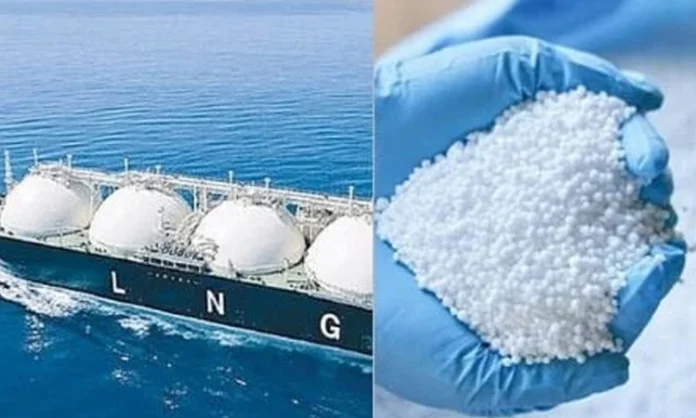
The Cabinet Committee on Government Purchase (CCGP) has approved the import of 70,000 tonnes of phosphate-based fertilizer from Morocco and four cargoes of liquefied natural gas (LNG) to ensure uninterrupted supplies of agricultural inputs and energy.
Finance Minister Amir Khosru Mahmud Chowdhury chaired the 42nd CCGP meeting at the Cabinet Division of Bangladesh Secretariat on Wednesday.
The committee approved 13 procurement proposals, with agriculture and energy receiving particular attention.
Under the approved fertilizer purchases, 40,000 tonnes of Diammonium Phosphate (DAP) will be imported from Morocco’s OCP Nutricrops under the existing government-to-government (G2G) arrangement. The fertilizer will cost US$894 per tonne, with the total procurement cost estimated at Tk 440.92 crore.
Another 30,000 tonnes of Triple Superphosphate (TSP) fertilizer will be imported from the same supplier at US$669.33 per tonne, costing Tk 247.78 crore.
The fertilizer procurement proposals were placed by the Ministry of Agriculture through the Bangladesh Agricultural Development Corporation (BADC).
The committee also approved four LNG cargoes proposed by the Energy and Mineral Resources Division to meet the country’s energy demand.
Three cargoes will be procured through international competitive bidding. The 49th cargo, scheduled for delivery on September 25-26, will be purchased from Aramco Trading Singapore Pte. Ltd. at US$27.54 per MMBtu.
The 50th cargo, scheduled for October 1-2, will be supplied by BP Singapore Pte. Ltd. at US$28.03 per MMBtu, while the 51st cargo, scheduled for October 5-6, will be procured from Vitol Asia Pte. Ltd. at US$26.6688 per MMBtu.
The fourth cargo, to be supplied by Aramco Trading Singapore Pte. Ltd. under Clause 7.2(b) of the existing Sale and Purchase Agreement, will arrive on September 10 at US$23.98 per MMBtu.
The approvals are expected to ensure adequate fertilizer supplies ahead of the upcoming agricultural season and maintain uninterrupted energy supplies for power generation, industries and other consumers.
The meeting also approved procurement proposals from several other ministries and divisions, including Road Transport and Highways, Commerce, Secondary and Higher Education, Power, Shipping, and Housing and Public Works.
The decisions come as the government seeks to strengthen food and energy security while ensuring cost efficiency in public procurement.

 has approved the import of 70,000 tonnes of phosphate-based fertilizer)