

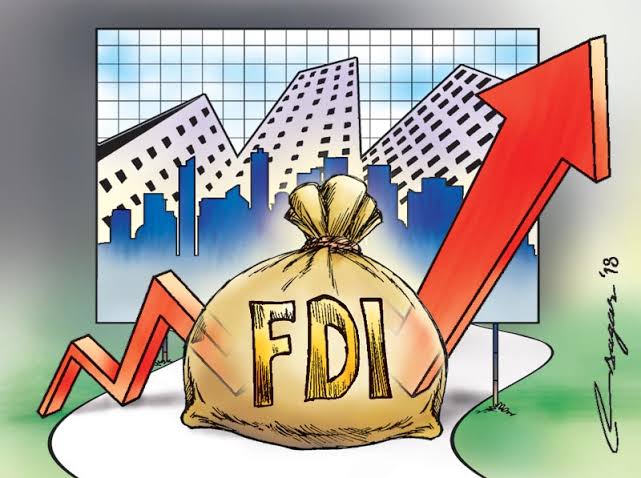
A total of 69 million 30 million dollars of FDI has arrived in the country during July-August. This number is 13.80 percent higher than the same period last year. Bangladesh received 60.9 million dollars of FDI during July-August of 2023-24 financial year.
UNCTAD data says that in 2023, 3 billion and 4 million dollars will be invested, but the amount or status of total foreign investment in Bangladesh has decreased at the end of the year. In 2022, the FDI status also decreased compared to the previous year. This means that a significant amount of foreign investment has withdrawn from Bangladesh in the last two years.
According to the latest calculations of the World Bank, while foreign investment in Bangladesh is less than one and a half percent of GDP, foreign investment in Maldives is more than 12 percent and foreign investment in Sri Lanka, which has overcome the economic crisis, is more than 20 percent. Where Maldives and Sri Lanka are so far ahead in foreign investment, the big question is why Bangladesh is not able to.
With the aim of facilitating business in the budget of the current fiscal year, Bangladesh has undertaken a plan to implement 110 reforms in the next fiscal year from 2024-25 to 2026-27 under the investment environment development program. In the proposed budget, it is mentioned in the budget that it is planned to transfer resources on a priority basis for the development of infrastructure supporting investment and employment. As a result of these initiatives, GDP growth is expected to reach 6.75 percent in the next financial year and 7.25 percent in the medium term.
The government is working to establish 100 economic zones in Bangladesh so far. Despite this, the 2023 estimates show that foreign investment fell further compared to 2022.
The fiscal year 2024-25 has started with a surplus in the current account of foreign transactions or balance of payments, one of the most important indicators of the country’s economy. Deficit in goods trade reduced due to reduction in imports.
Due to the dollar crisis, the ousted Sheikh Hasina government took various steps to rein in the import expenditure. Dr. The interim government led by Muhammad Yunus is also following that path. It also has benefits. Import costs are decreasing. And the financial year 2024-25 has started with a downward trend in the trade deficit.
Bangladesh Bank released updated information on the current account balance of foreign transactions on Tuesday. It can be seen that in the first two months of the current fiscal year. July-August, the total deficit in goods and trade stood at 275 million 40 million (2.75 billion) dollars, which is about 9 percent less than the same period of the last fiscal year. During these two months of the fiscal year 2023-24, the trade deficit amounted to 304 crore 40 lakh (3.04 billion) dollars.

