

B Mirror Report: Shopkeepers claim that the ongoing price increases for necessities like rice, edible oil, and utilities have reduced disposable income, forcing many middle- and lower-income families to prioritize basic needs over festival shopping.
Despite this, traders are hopeful that sales will pick up once most shoppers receive their festival allowances, regular salaries, and remittances from relatives abroad. As a result, Eid sales in various shopping malls throughout the capital have not yet gained momentum.
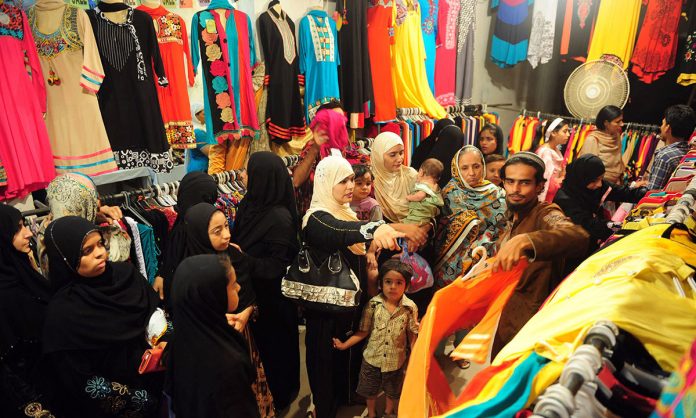
Visits to New Market, Gausia, Nurjahan, and Bashundhara City showed people from all walks of life perusing fashion stores to find what they wanted. To draw customers, store owners showcased vibrant assortment of sarees, panjabis, and children’s clothing.
Customers complained about higher pricing, and traders said overall sales were still below expectations despite the efforts. Before making purchases, many customers were observed researching prices among stores and haggling fiercely.
“But overall sales are still modest,” he stated. “Once workers begin collecting their paychecks and festival allowances, we anticipate a significant increase. In anticipation of greater demand in the days ahead, wholesalers have already expanded their supplies.
Buyer Tamnnah claimed that she paid Tk 500 for a newborn set for her one-year-old niece, which she thought was more than she paid the previous year. Last year, a newborn set of comparable quality used to retail for Tk 400–450,” she stated.
Many consumers arrived to malls early in order to avoid the crazy rush before Eid. Some claimed that in order to avoid traffic jams and crowds during the last week of Ramadan, they would rather finish their purchases beforehand.
In addition to shopping at malls, many people also went to sidewalk stores to purchase festival-related goods.


