

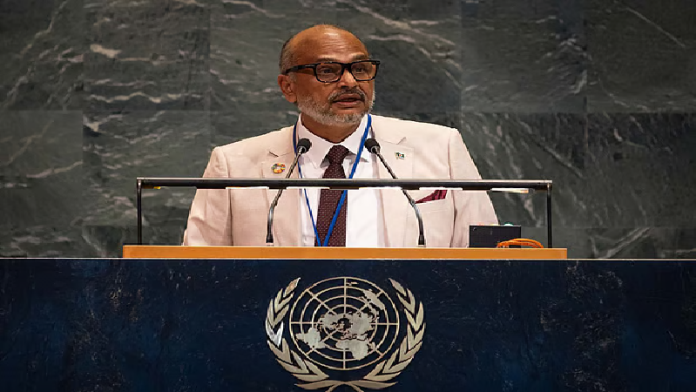
Bangladesh has called for a three-year extension to its graduation from the Least Developed Country (LDC) category, citing political instability, macroeconomic pressures, climate change impacts and ongoing global uncertainties.
Speaking on behalf of the LDC Group at the United Nations Economic and Social Council (ECOSOC) High-Level Segment at the UN headquarters in New York on Monday, Economic and Planning Adviser Rashed Al Mahmud Titumir said Bangladesh and Nepal have jointly requested that their graduation deadline be extended until November 2029.
He said the additional time was “not a luxury, but a necessity” under the current global and domestic circumstances. According to Titumir, the extension is essential to safeguard economic stability, complete post-graduation preparations and implement the necessary reforms for a smooth transition.
The adviser noted that 14 LDCs are currently at different stages of the graduation process and stressed that sustained international support would be critical to ensuring their successful transition to developing-country status.
He also said progress toward achieving the 2030 Sustainable Development Goals (SDGs) remains off track, particularly for LDCs, which continue to face multiple challenges, including climate change, mounting debt burdens, limited fiscal capacity, declining official development assistance, the digital divide and restricted access to affordable financing.
On behalf of the LDC Group, Titumir outlined five key priorities for the international community: expanding concessional financing, reforming the global financial architecture, ensuring adequate and accessible climate finance, improving market access for LDC exports, and strengthening international cooperation on technology transfer and digital capacity building.
He expressed hope that implementing these priorities would help LDCs achieve a sustainable and durable transition to developing-country status.


 category,)