

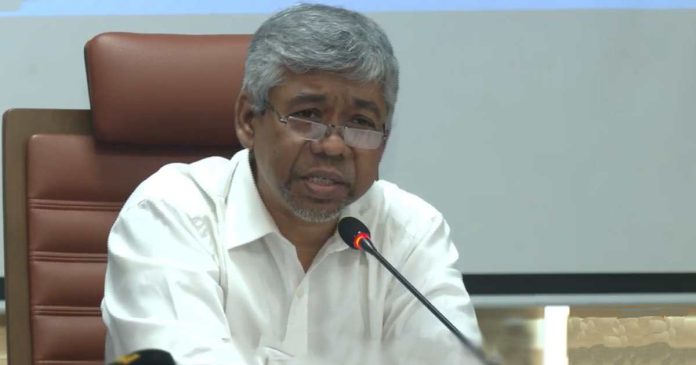
B Mirror Report : National Board of Revenue (NBR) Chairman Md. Abdur Rahman Khan has said that the country’s tax collection system is being digitized to ensure greater transparency, efficiency, and reduced public harassment in the future.
He stated that the ongoing digital transformation will significantly reduce complaints and eliminate the need for taxpayers to physically visit customs, VAT, and bond offices. He added that the government is working to modernize bond management, tax administration, VAT, and customs systems to make them more paperless and efficient, while simplifying procedures to ensure wider tax compliance.
The remarks were made as the chief guest at a pre-budget consultation meeting for the fiscal year 2026–27, held at the conference hall of the World Trade Center in Agrabad and organized by the Chittagong Chamber of Commerce and Industry.
The meeting was chaired by CCCI Administrator Md. Motahar Hossain, and attended by senior NBR officials, including members responsible for income tax policy, customs policy and ICT, and VAT policy. Several business leaders and chamber representatives were also present.
In his speech, the NBR Chairman emphasized the need for balanced revenue collection to support a welfare state, while also rationalizing tax rates in line with economic conditions and the country’s graduation from LDC status. He noted that excessive pressure on taxpayers should be avoided.
He further said that manual processes for non-compliant taxpayers will be gradually discontinued, physical customs inspections will be reduced, and the bond system will be modernized to prevent harassment during import and re-export procedures.
He also highlighted that automation has already streamlined many services, enabling online return filing throughout the year, reducing the need for physical visits to NBR offices, and introducing a single-window system for issuing certificates.
Business leaders at the meeting presented multiple proposals aimed at reforming income tax, VAT, and customs systems. Suggestions included raising the tax-free income threshold, reducing customs duties on renewable energy equipment, increasing scanners at Chattogram Port, improving laboratory facilities, simplifying VAT structures, and speeding up tax refunds.
Chamber representatives also urged reforms to reduce trade costs, support domestic industries, and improve efficiency in customs operations through enhanced manpower and technology upgrades.
The consultation concluded with the submission of dozens of reform proposals aimed at shaping a more efficient and business-friendly tax system for the upcoming fiscal year.

 Chairman Md. Abdur Rahman Khan has said that the country’s tax collection system is being digitized)