

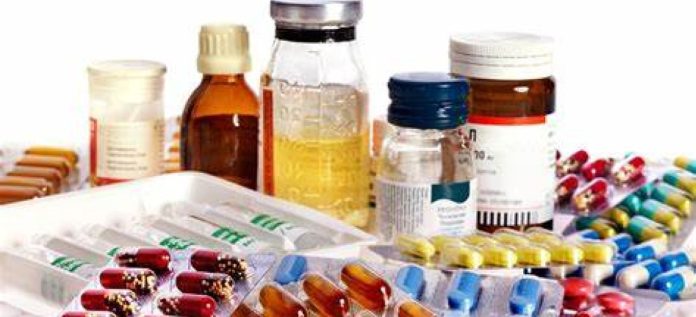
B Mirror Report : The government is set to introduce a new drug pricing policy alongside the expansion of the list of essential medicines. Under the proposed policy, pharmaceutical manufacturers will be required to ensure the supply and sale of essential medicines in the market equivalent to at least 25 percent of the value of their total annual sales. Companies that fail to meet this requirement will not be allowed to apply for approval of any new medicines.
The Ministry of Health has already approved the policy, and it is now awaiting publication in the form of a gazette.
Earlier, the government announced the expansion of the National Essential Medicines List. With the addition of 135 new drugs, the total number of essential medicines has risen to 295. The government has said that prices of these medicines will be fixed soon, and the National Drug Pricing Policy–2025 has been finalized.
While the government’s decision has been viewed as positive for the general public, pharmaceutical industry owners have criticized the 25 percent production obligation as “unrealistic” and “anti-market.” They allege that no meaningful consultation was held with industry stakeholders while expanding the essential medicines list or formulating the pricing framework.
Dr. Md. Zakir Hossain, Secretary General of the Bangladesh Association of Pharmaceutical Industries (BAPI), said that no company in the country produces 100 percent essential medicines. Most firms produce no more than 5–10 percent, while many new companies do not produce any at all. “If companies are forced to produce 25 percent without price adjustments, they will either incur losses or shut down,” he said.
He added that prices of essential medicines have long been out of line with reality. Over the past three decades, prices have been revised only twice, resulting in significant losses for manufacturers of many drugs. As a result, production of several important products, including saline, has already stopped.
Renata Limited’s Chief Executive Officer Syed S. Kaiser Kabir echoed similar concerns, saying that fixing a specific production ratio without considering market demand would not be effective. “No company can afford to produce excess medicines and store them in warehouses if there is no demand,” he said.
BAPI President Abdul Muktadir alleged that industry stakeholders were completely ignored in the pricing process. According to him, the industry still lacks a clear understanding of the pros and cons of the new policy.
Pharmacist and former World Bank consultant Md. Abu Zafar Sadeq welcomed the expansion of the essential medicines list but cautioned that excessive price controls could negatively affect quality and supply chains. He said a collaborative pricing mechanism between the government and the industry, rather than unilateral decisions, would be more beneficial for patients.
Md. Sayedur Rahman, Special Assistant to the Chief Adviser at the Ministry of Health, said that nearly 80 percent of common diseases can be treated with essential medicines. Bringing the prices of these drugs under control would make healthcare more accessible for the general population. He described the initiative as a “groundbreaking decision.”
He claimed that a task force spent the past 14 months finalizing the draft policy through consultations with manufacturers, researchers, and international organizations.
Under the new policy, the maximum retail price of essential medicines will be determined using a “cost-plus benchmarking” method, excluding VAT. Prices will be fixed by a government-appointed committee or the Directorate General of Drug Administration (DGDA) by adding raw material costs, primary packaging expenses, and a specified markup.
For medicines outside the essential list, prices will be determined using a reference pricing method. If a certain number of companies produce a drug, the price will be set based on the median market price or international prices, and must remain within 15 percent of the designated benchmark.
Task force member and Dhaka University professor Syed Abdul Hamid said manufacturers had moved away from producing essential medicines due to prolonged price stagnation. If properly implemented, the new policy would increase drug availability and reduce prices. “With regulated profits, both the industry and public health will benefit,” he said.
However, industry owners fear that failure to consider market realities could create complications in implementing the policy. All stakeholders are now watching closely to see how the policy is enforced once the gazette is published.


