

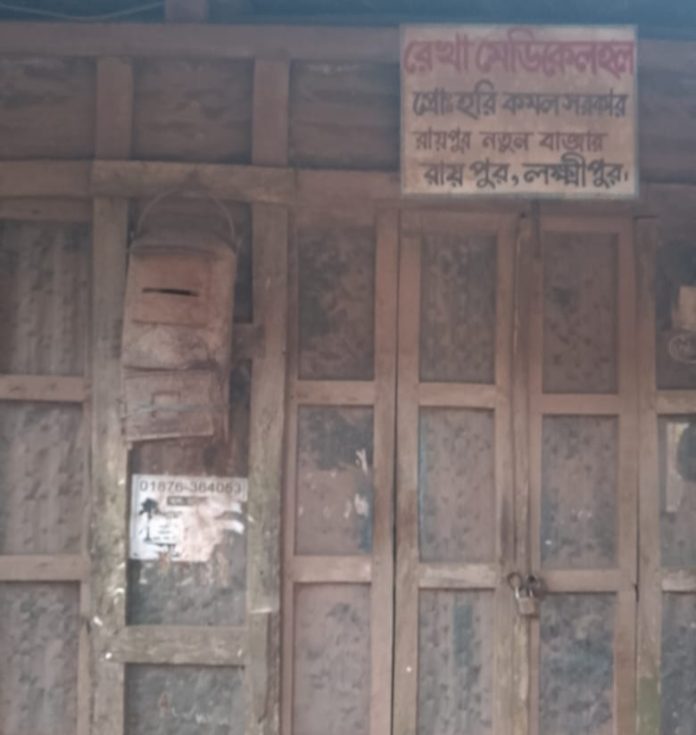
Azad, Lakshmipur Correspondent : As the world observes World Postal Day, the state of post offices in Lakshmipur paints a grim picture of neglect and decay. In many areas of the district, so-called “post offices” exist only in name—with operations often being run from tea stalls, private shops, and even school classrooms.
In Raipur, Hari Kamal Sarkar, a drugstore owner, has unofficially served as a post office for over 40 years. “Letters haven’t come or gone in 20 years,” he says. “Now people use mobile phones and Facebook.
Of the six post office names in Raipur Upazila, only the main Raipur Post Office has an actual functioning office. The remaining five—including Rakhalia Bazar and Bhuiyan Bari—have no infrastructure, staff, or physical presence, yet residents continue using their names in official addresses.
Field visits revealed that postal activities are handled informally. At Rakhalia Bazar, a peon receives letters at a tea shop. In Bamni Union, the “post office” is a locked building, and work is done from a local schoolroom. Staff across the district struggle with the lack of permanent offices, storage, or seating.
Lakshmipur Postal Division includes 2 upazila post offices, 10 sub-post offices, and 52 branch offices, but officials admit that most branch offices exist only on paper. Staff work on low honorariums, with no dedicated space.
Post office inspector Amal Krishan Das stated that branch offices are set up only where local donors provide land. “Without land donation, we manage from any available space—schools, madrasas, or markets.
As technology changes communication methods, the traditional postal service in Lakshmipur is fading—not from lack of need, but from lack of infrastructure and attention.


