

The pharmaceutical sector in Bangladesh can encounter significant obstacles following its removal from the Least Developed Country (LDC) list. The laws governing intellectual property will be more stringent. This might raise the cost of medications and result in extra expenses for copyright problems with books and software, among other things. This has caused alarm among industrial and economic specialists.
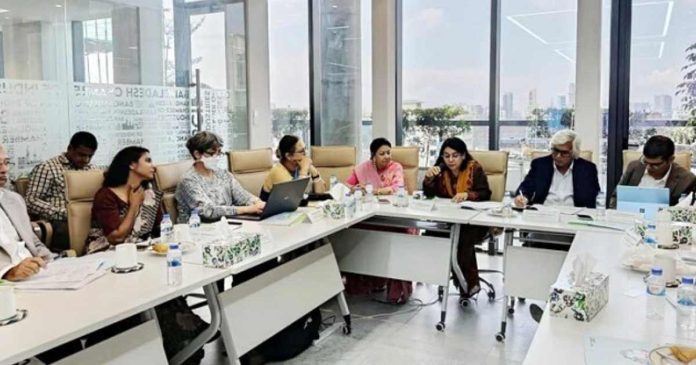
The Bangladesh Chamber of Industries (BCI) hosted a conference on Saturday, August 16, in Tejgaon, the capital, with the topic “Challenges of Intellectual Property and Trade Transformation: Best Strategies for Local Industries.” The occasion was presided over by Anwar-ul Alam Chowdhury (Parvez), President of the BCI.
At the seminar, Dr. Fahmida Khatun, the Executive Director of the Center for Policy Dialogue (CPD), stated that the domestic and geopolitical challenges faced by developed nations are impacting trade. Consequently, there are periodic fears surrounding protectionist trade measures. The World Trade Organization (WTO) is gradually losing its influence. The recent tariffs imposed by the United States on various countries have altered the existing rules and regulations. In response to this situation, some nations are opting for bilateral trade agreements instead of relying solely on multilateral trade.
He mentioned that numerous countries are currently engaging in free trade agreements (FTAs). However, relying solely on FTAs may not yield significant advantages. The benefits derived from these agreements are contingent upon effective negotiation skills.
Dr. Mustafa Abid Khan, a former member of the Bangladesh Trade and Tariff Commission, remarked that the challenges arising from the transition of Least Developed Countries (LDCs) in exports will be manageable. Nevertheless, the primary concern will lie in the realm of intellectual property. Following the transition, the cost of medicines is expected to rise. Additionally, there will be increased expenses in various sectors, including software and books, due to copyright complications. It is crucial to focus on how to tackle these issues.
Dr. Abdur Razzak, chairman of the research organization Rapid, pointed out that the government derives 27 percent of its revenue from import duties. The implementation of FTAs is likely to diminish revenue from this area. In light of this, it is essential to formulate an FTA strategy grounded in rational considerations.
Dr. Masrur Riaz, Chairman of Policy Exchange Bangladesh, emphasized that to bolster Bangladesh’s export base, it is vital to diversify both products and markets. There should be an increase in private investment to enhance employment opportunities. Boosting investment in sectors such as the digital economy and small and medium-sized enterprises (SMEs) will contribute to job creation.
Anwar-ul Alam Chowdhury stated that business leaders are requesting a delay in the LDC transition. The forced transition to LDC status is leading to the establishment of Free Trade Agreements (FTAs) with various countries. The government is expected to experience a loss in revenue due to decreased import duties. Several sectors, including packaging and cement, will be adversely affected by this reduction in duties.
He mentioned that the cost of conducting business in Bangladesh is quite high. A significant factor contributing to this is the elevated interest rates. Additionally, the cost of warehousing at Chittagong Port has surged nearly fourfold. The high levels of defaulted loans in the banking sector have raised concerns about whether foreign banks will continue to accept Letters of Credit (LC) in the future.
Sania Reed Smith, a Senior Consultant at the Third World Network, remarked that Bangladesh currently has the capability to produce and export medicines without the constraints of intellectual property rights. However, if it loses its LDC status, patents could be imposed on these medicines, potentially deterring investment.
Nahian Rahman Rochi, the Head of Business Development at the Bangladesh Investment Development Authority (BIDA), indicated that post-LDC transition, duties ranging from 10 to 15 percent may be levied on several sectors, including pharmaceuticals. To address this challenge, it is essential to prepare for signing FTAs, Preferential Trade Agreements (PTAs), and other bilateral agreements. An FTA strategy must be developed to facilitate this process.
Other participants at the seminar included Kamran T. Rahman, President of the Metropolitan Chamber of Commerce and Industry (MCCI), and Abdul Hai Sarkar, President of the Bangladesh Association of Banks (BAB), among others.

 list.)