

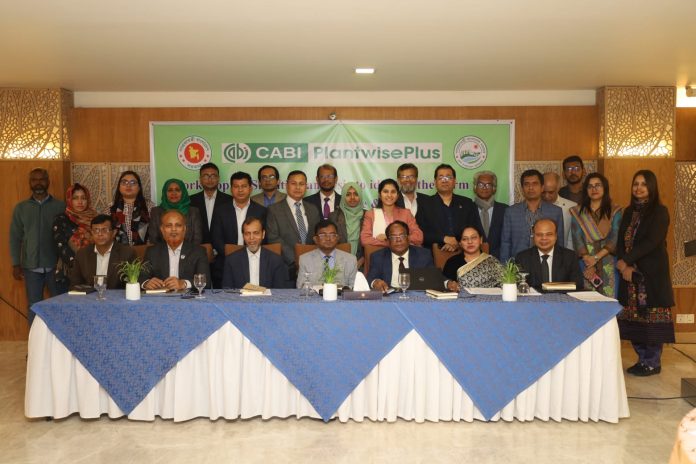
A two-day workshop on “Situation analysis to Identify harm and risk associated with pesticide use and assess root causes” was held on December 23–24, 2024, at Hotel Lakeshore, Gulshan-2, Dhaka. Organized by Plant Protection Wing, Department of Agricultural Extension (DAE) with support from CAB International, the event brought together government officials, researchers, academics, private sector representatives, NGOs, and international partners.
The workshop was graced by the presence of Md. Saiful Alam, Director General of the Department of Agricultural Extension (DAE), who graced the event as chief guest. In his opening remarks, he emphasized the importance of addressing the risks associated with pesticide use to ensure the safety of farmers, consumers, and the environment.
He commended the collaborative efforts of DAE, and CABI in conducting comprehensive studies and fostering a multistakeholder approach to validate actionable solutions. Esteemed guests included Dr. Md. Saleh Ahmed (Country Representative, CABI), and Dr. Md. Shahinul Islam (Director, Administration and Finance Wing, DAE),
S M Sohrab Uddin, (Director, Horticulture Wing, DAE), Md. Asadullah, (Former Director General, DAE, and Advisor, APAARI) and Prof Dr. Md. Golam Sarwar, Head of Entomology Department, NIPSOM among others. The workshop validated findings from four critical studies conducted by CABI, focusing on pesticide classification based on hazards, management of expired pesticides, development of IPM packages with biocontrol solutions, and preparation of a HACCP plan for tomato. The two days evet was moderated by Ms. Karima Akter of Plant Protection Wing, DAE.
Four Keynote papers were presented by Prof. Abu Noman Faruk Ahmmed of Sher-e-Bangladesh Agricultural University, Prof. Rashedul Islam, Vice-Chancellor, Kurigram Agricultural University, Mr. Debasish Chatterjee, Bangladesh Crop Protection Associatio, Prof. Dr.Md. Shaef Ulah, Bangladesh Agricultural University and Prof. Dr. Md. Abdul Maleque of Sylhet Agricultural University.
Key recommendations included enhancing training on safe pesticide use, integrating biocontrol measures into pest management strategies, and implementing HACCP frameworks. Stakeholder feedback will guide policy integration and capacity-building initiatives to promote sustainable pest management in Bangladesh to help minimizing the risk of human health and the environment.

