

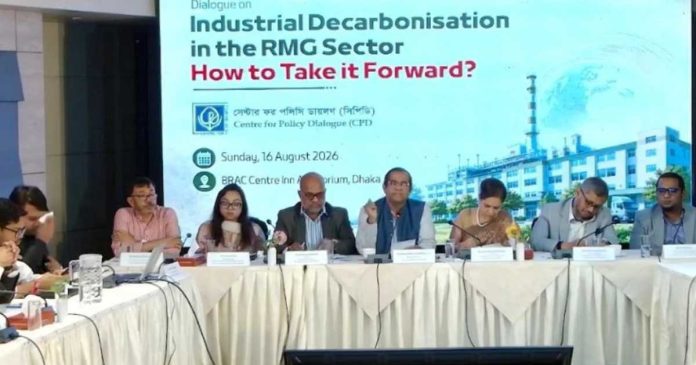
The Centre for Policy Dialogue (CPD) has called for faster adoption of green technologies in Bangladesh’s ready-made garment (RMG) factories to maintain the sector’s international competitiveness and strengthen its position in the global supply chain.
The call was made at a seminar titled “Industrial Decarbonisation in the RMG Sector: How to Take It Forward”, held at BRAC Centre in Dhaka on Sunday.
At the event, CPD presented a research report highlighting the need for Bangladesh’s garment manufacturers to shift towards low-carbon production systems in response to the European Union’s upcoming Carbon Border Adjustment Mechanism (CBAM) and decarbonisation targets set by global fashion brands.
The study said policy and technological reforms are essential to make the transition sustainable. It particularly recommended bringing small and medium-sized garment factories under green financing facilities on easier terms and strengthening efforts to secure funding from international climate funds.
CPD also stressed the need to develop modern data-tracking systems to measure and analyse daily carbon emissions at factories. Such systems would enable manufacturers to assess their emissions and take effective measures to reduce them.
CPD Research Director Dr Khondaker Golam Moazzem, who presented the report, outlined the opportunities and challenges for reducing carbon emissions in the garment sector and discussed necessary policy reforms.
According to the study, major sources of carbon emissions exist across several stages of garment production. Processes such as textile dyeing, weaving, washing and finishing consume large amounts of heat and electricity, resulting in significant emissions.
Old boilers, natural gas-powered generators and the transportation of imported cotton and chemical raw materials also contribute to the sector’s carbon footprint.
Despite these challenges, Bangladesh has already made significant progress in green manufacturing and ranks among the global leaders in the number of environmentally friendly, LEED-certified green factories.
Participants at the seminar said that ensuring access to technology, financing and policy support, alongside a rapid shift towards environmentally friendly production, is essential to further strengthen Bangladesh’s position in the global apparel market.


 has called for faster adoption of green technologies in Bangladesh’s ready-made garment (RMG) factories)