

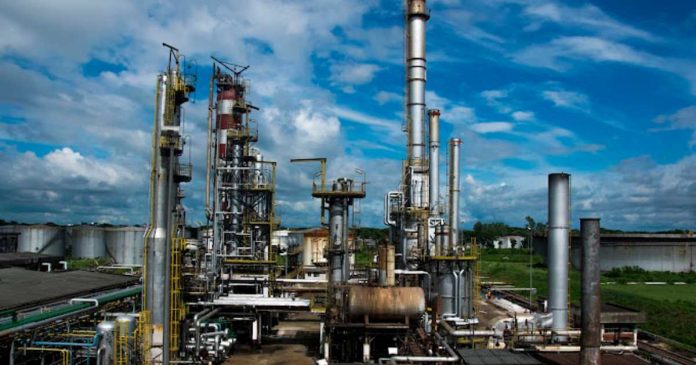
Bangladesh could save about $473 million annually on crude oil imports if the Eastern Refinery Limited-2 (ERL-2) project is completed, according to official documents reviewed at a government committee meeting.
The project is expected to reduce crude oil import costs by around $20 per barrel, generating annual savings equivalent to approximately Tk 57.88 billion.
To accelerate implementation, the government has decided to invite bids under the “one-stage, two-envelope” procurement method.
The information was presented at a meeting of the Standing Committee on Non-Concessional Loans, chaired by Finance Adviser Amir Khasru Mahmud Chowdhury on July 7, according to meeting minutes.
The committee also approved a proposal to secure more than $1 billion in financing from the Islamic Development Bank (IsDB) to strengthen Bangladesh’s energy security and reduce foreign exchange expenditure on fuel imports.
As international development partners have become increasingly reluctant to finance fossil fuel-related projects, the government has opted for IsDB financing despite its comparatively higher borrowing costs.
Construction of the ERL-2 project began in December 2025 and is scheduled for completion by November 2030. Once operational, it will add 3 million tonnes of annual crude oil refining capacity to the existing 1.5 million tonnes at Eastern Refinery.
Bangladesh Petroleum Corporation (BPC) Chairman Md Rezaur Rahman told the meeting that the project has a Financial Internal Rate of Return (FIRR) of 19.24% and an Economic Internal Rate of Return (EIRR) of 23.21%.
Under the proposed financing package, the IsDB will provide funding in two phases. The first phase includes a loan of approximately $520.6 million and a $600,000 technical assistance grant, followed by a second-phase loan of $483 million.
The 20-year loan carries a five-year grace period, with an interest rate set at the six-month SOFR plus a 1.6% spread. Based on the July 5 SOFR of 3.846%, the effective interest rate would be 5.446%.
ERD Secretary Md Shahriar Kader Siddiky said securing international financing for fossil fuel-related projects has become increasingly difficult, but Bangladesh’s longstanding relationship with the IsDB made the funding possible.
A Bangladesh Bank deputy governor said foreign financing was appropriate given the project’s substantial foreign currency requirements and the need to preserve the country’s foreign exchange reserves.
Energy and Mineral Resources Division Secretary Mohammad Saiful Islam said the one-stage, two-envelope tender method, required under IsDB procurement guidelines, would help speed up the procurement process by evaluating technical proposals before opening financial bids.

 project)