

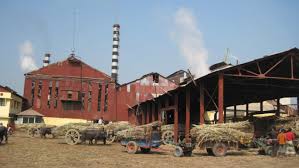
In the field of medical science, amputation is deemed necessary when a limb is so extensively damaged or infected that it endangers the patient’s overall health and survival. This critical intervention helps to contain the infection, safeguarding the rest of the body from further harm. The situation with Bangladesh’s state-owned sugar mills mirrors this medical necessity. Enduring chronic mismanagement, financial discrepancies, and a lack of modernization, these mills have been allowed to decline under successive administrations. Consequently, they are now impacting the wider financial sector. The total of their unpaid loans has reached an alarming Tk 105.18 billion and continues to rise, posing a significant threat to the financial stability of certain state-owned banks. These loans, which are backed by state guarantees, are compromising the banks’ asset quality, exacerbating their provision shortfalls, and tarnishing their international standing. This situation subsequently increases the costs associated with the banks’ international trade and ultimately diminishes their profitability. As a result, the banks are now seeking repayment of these loans, along with accrued interest, or the issuance of government bonds to address the outstanding debts.
Historically, the government has utilized treasury bonds to address the debts of the Bangladesh Petroleum Corporation and the Bangladesh Jute Mills Corporation. A similar strategy appears to be on the horizon for the Bangladesh Sugar and Food Industries Corporation (BSFIC). While the issuance of bonds may assist banks in recouping their non-performing loans within the sugar sector, it fails to tackle the root issues at hand. Ultimately, the increasing debt burden will rest on the government. The financial outlook for state-owned sugar mills remains grim.
These mills are currently facing a loss of approximately Tk 140 for every kilogram of sugar produced, with production costs soaring to Tk 300, while the selling price stands at Tk 160 (Brown Sugar). Consequently, sales have stagnated, resulting in a surplus of unsold inventory, as imported raw sugar is considerably more affordable. This situation arises from the inefficiencies in the mills’ production processes, with the recovery rate from sugarcane being among the lowest globally.
In addition to suffering financial setbacks, the sugar mills have not achieved their intended goal. This goal was to protect the sugar industry from monopolistic practices by the private sector through government intervention. Unfortunately, these mills have had minimal impact on the market. Bangladesh’s annual sugar consumption is approximately 2.4 million tonnes, while local production stands at a mere 30,000 tonnes, accounting for less than 1% of the total demand. As a result, the nation relies heavily on imports to satisfy its needs. Compounding the issue, the government frequently imposes high import tariffs on raw sugar, ostensibly to mitigate the financial losses of the mills, which in turn drives up domestic sugar prices.
Keeping these mills operational in their current form is not only economically unviable but also counterproductive. However, closing them poses a politically sensitive dilemma, as it would result in significant job losses for thousands of workers. The livelihoods of countless sugarcane farmers are also linked to the mills, despite the fact that the area dedicated to sugarcane cultivation has been steadily decreasing due to the mills’ declining performance. Nevertheless, the ongoing subsidies in the form of state-backed loans, funneled into what is essentially a bottomless pit, lack economic justification. A decisive strategy is essential. The sugar mills should either be sold off, with assets liquidated and debts addressed, or privatized to facilitate restructuring and rejuvenation under more effective management. The government must act promptly to prevent further financial deterioration.

