

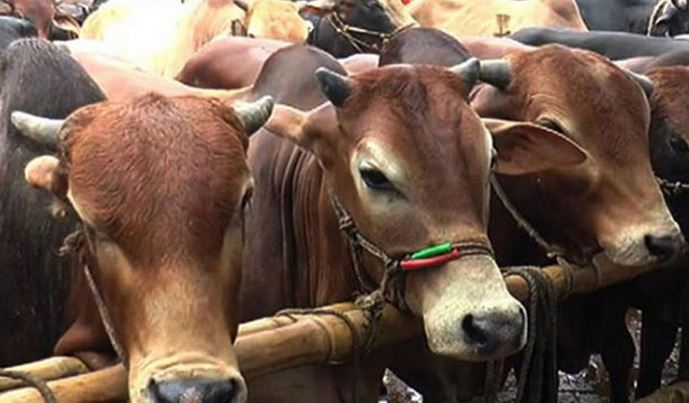
Livestock officials and experts have assured the public that there is no shortage of sacrificial animals for the upcoming Eid-ul-Azha, which is set to be observed next week. According to the latest statistics from the divisional livestock department, over 12.9 million animals are ready for the festival, surpassing the estimated demand of 10.7 million animals.
Dr. ABM Khaleduzzaman, Director of Production at the Department of Livestock Services (DLS), confirmed that the country has an excess of 2.27 million animals this year. “We have more than enough livestock to meet the demand for Eid,” he said, emphasizing the surplus after fulfilling the nation’s requirement for sacrificial animals.
Each year, the demand for sacrificial animals is projected by adding five percent to the previous year’s slaughter numbers. This year’s demand stands at 10.7 million animals, including 5.2 million cattle, 160,320 buffaloes, 6.85 million goats, 767,743 sheep, and 1,850 other species.
Dr. Khaleduzzaman mentioned that the pricing of these animals will depend on supply and demand dynamics. He noted, “Since we have made the statistics through surveys, there will not be much difference between demand and supply. It seems that the prices will be stable.”
To ensure a smooth and safe market environment, the DLS has planned close monitoring at all levels until the end of Eid-ul-Azha. Permanent veterinary doctors and mobile veterinary teams will be stationed at cattle markets across the country, including temporary and permanent markets in the capital under the north and south city corporations.
Additionally, the DLS has assured farmers that they will not face taxation for selling animals from their homes and will not be coerced into selling on the streets if they prefer to go to distant markets. Law enforcement agencies, local government bodies, and municipal authorities will be vigilant to prevent any extortion attempts.
The DLS also encourages farmers to use digital payments to avoid carrying cash, and online sales of sacrificial animals will continue nationwide, benefiting both buyers and sellers as seen in previous years.


